Audio Crew

Serving the Greater Moncton Area and All of New Brunswick

624 Salisbury Rd, Moncton, NB E1E 1B8, Canada 506-858-2739
  • Home
  • Services
    • Car Audio
    • Marine Audio
    • Motorcycle Audio
    • Remote Starters
    • UTV and Side-by-Side Upgrades
  • About Us
  • Location
  • Contact Us
  • Facebook
  • Instagram

Choosing the Best Car Starter Remote

Best Car Starter

Under the hood, most remote car starters are very similar. Most brands offer two or three different controllers and allow the shop you work with to bundle those units with different remotes, providing varying levels of range and features. In this article, we partnered with the industry-leading remote starter manufacturer Compustar to explain the different options available to consumers. Here’s a simple guide to make choosing the best remote car starter easy.

Shopping for a Remote Car Starter

The shop you choose to install a remote starter is just as important as the hardware and remote you select. Working on modern cars and trucks isn’t as easy as it was decades ago. A modern starter needs to communicate with the engine management system, vehicle body control modules, and factory-installed security systems to function correctly. Making the proper connections and executing the correct programming are tasks best handled by an expert.

If you shop for the lowest-priced remote starter, the chances of issues down the road are exponentially higher than if you choose an expert shop that takes pride in professional installation.

Forego the urge to shop over the phone—visit retailers in your area instead. You’ll quickly get a sense of who is professional and who you should avoid.

1. Remote Start Range

The most significant difference between car starter key fobs is their range. Most modern factory-issued key fobs have a range of a few hundred feet. This means you can likely start your car from across a small parking lot, but you might not be able to start it from inside a store.

Aftermarket fobs range from 1,500 feet to three miles under ideal conditions. It’s better to think of these offerings as power levels. For example, the Compustar CS-925S starter system remote is rated to provide up to 1,500 feet of range. This remote provides two to three times as much power as a factory remote, often doubling or tripling the effective range.

Best Car Starter
The affordable Compustar CS925-S remote starter includes remotes rated for up to 1,500 feet of range.

At the opposite end of the spectrum, some remotes are rated for two to three miles. If you work in a large building, you’ll want the added power of these solutions.

2. Number of Buttons

Remote car starter fobs are available in two styles based on the number of buttons: one-button and multi-function.

One-button remotes are a good choice if you will continue to carry a factory remote that includes a trunk release button. The factory remote often serves as the vehicle’s key and is required to start the car or truck.

Multi-function remotes have four or five buttons that provide dedicated access to locking/arming, unlocking/disarming, trunk release, remote start, and auxiliary functions. The number of buttons on a remote doesn’t define its quality or range—only the number of functions you have access to.

Best Car Starter
The Pro 1WG18 remote provides up to 1,500 feet of range and is backed by a three-year warranty as part of the PRO Series.

3. One-Way and Two-Way Remotes

Another key feature to consider is whether you want a one-way or two-way remote.

With a one-way remote, you send a command to the vehicle by pressing a button. If the car is in range, the command will be executed. If you are too far away, nothing happens.

With a two-way remote, any command sent by the remote and executed by the vehicle is confirmed back to the remote. The remote will beep and flash an LED or icon to notify you. You’ll get confirmations for locking, unlocking, remote starting, and other features.

As a subset of two-way remote options, you can pick from LED or LCD visual indicators. An LED remote will have at least one, often three LEDs that flash to indicate when a command has been executed.

Best Car Starter
The Prime 2WG17 remote includes three LEDs that flash to let you know when the vehicle is locked, unlocked, or the remote starter has been activated.

An LCD remote is considered the highest-end option. These remotes use a small LCD screen with icons to show what commands have been executed and the status of your vehicle. For example, a lock symbol on the remote confirms that the vehicle executed a lock/arm command.

Best Car Starter
The five-button two-way 2WQ9 remote has a two-color LCD that indicates vehicle status.

4. Battery Type

All remotes require a battery to function. The most common type is the CR2032 coin cell. These three-volt batteries are compact, inexpensive, and typically provide more than a year of service in one-way remotes and many months in two-way remotes. It’s a good idea to purchase an extra battery when you buy the remote so you’re prepared when it wears out.

Best Car Starter
The Prime 1WR3 one-button remote uses a CR2032 coin cell as a power source.

Many premium remotes have a built-in lithium-polymer or lithium-ion rechargeable battery. These remotes include a Micro-USB or USB-C port for charging. Under normal use, these two-way LCD units last three to five months between charges. Charging only takes a couple of hours and can be done from any powered USB port—even in your vehicle while driving. One tip: it’s best to limit the charge current to these cells. Using a 500 mA wall charger will maximize battery life.

Best Car Starter
The impressively durable Compustar T12 remote features up to 3 miles of range, an LCD screen, and a rechargeable battery.

5. Weather-Proof Designs

Some remotes, like Compustar’s flagship models, have a full IPX-7 waterproof rating. Basic remotes are typically water-resistant. If you’re prone to dropping your keys or leaving them in your pocket on laundry day, consider a waterproof solution.

Best Car Starter
The Pro T13 remote features an IPX-7 waterproof design and an industry-leading range of three miles.

6. Warranty

When shopping for a remote starter, it’s essential to understand the warranty coverage offered by your retailer and the hardware manufacturer. In most cases, the brain or controller is backed by a lifetime warranty. Additionally, these components should be reprogrammable if you plan to use the hardware in another vehicle with a new harness.

Remotes typically come with a one-year warranty, but premium options, such as Compustar’s PRO Series, offer a three-year warranty for added peace of mind.

Finally, don’t forget to ask about the warranty on labor or workmanship. Many reputable shops provide a lifetime warranty on their installation work, ensuring your remote starter continues to function reliably for years to come.

7. Smartphone Control Options

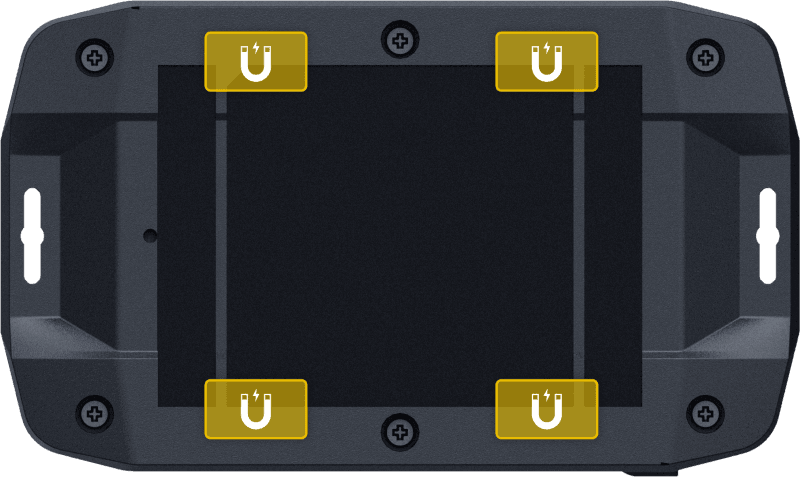
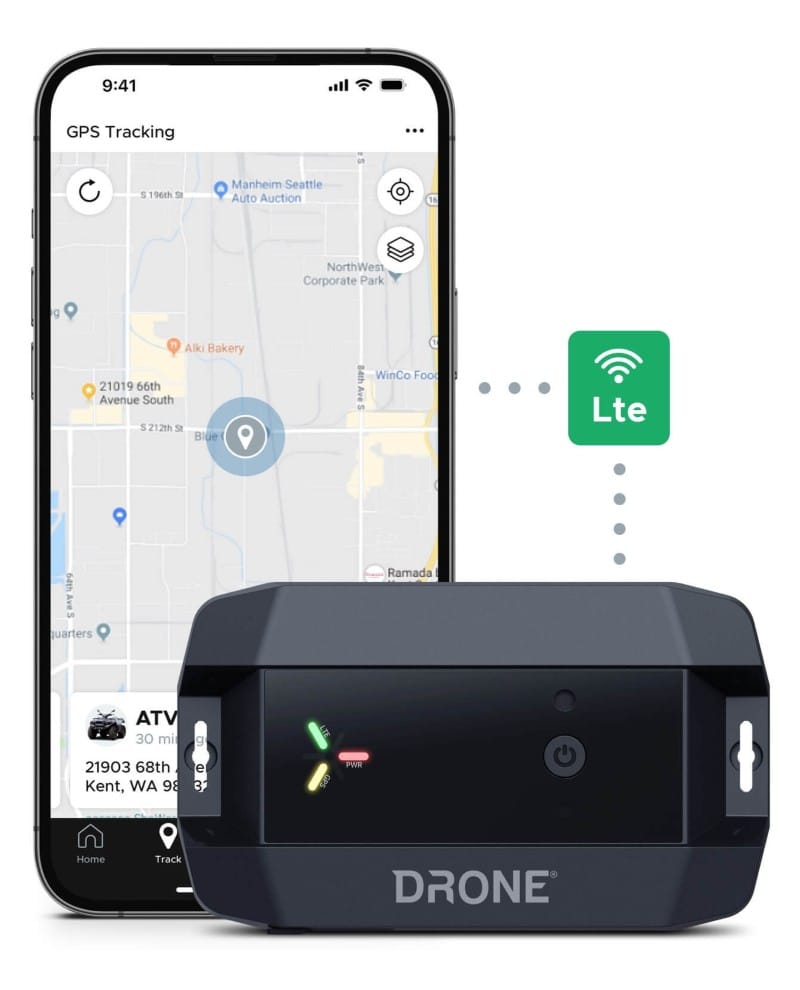
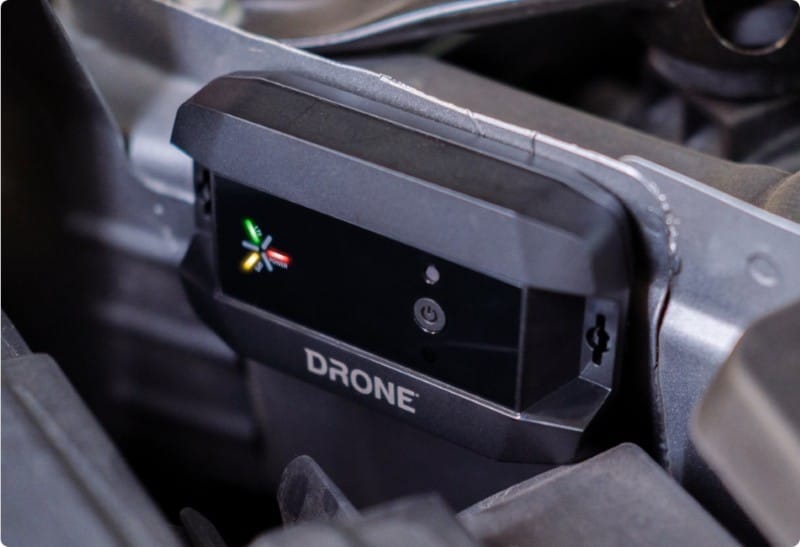
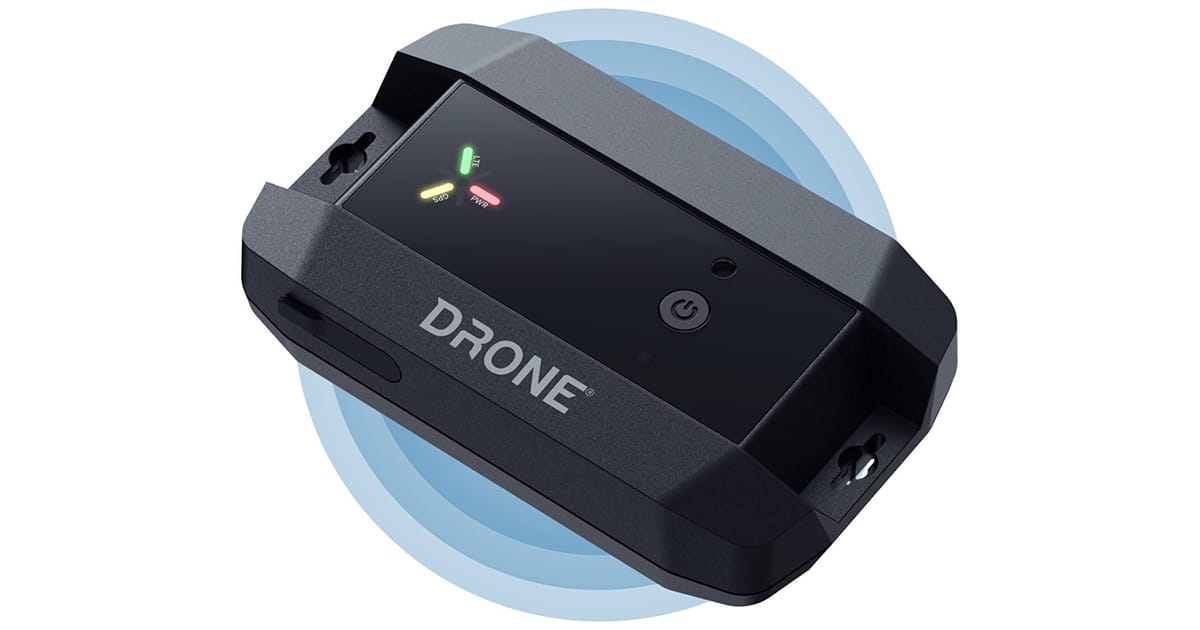
Another option is a smartphone control solution such as Drone. Drone works with an app on your phone that communicates with a small transceiver in the vehicle via the local cellular network. The app allows you to lock, unlock, remote-start, and control auxiliary features, and confirm commands within seconds.

There is a small monthly charge for the cellular service. Retailers can explain available features and service plans, including vehicle tracking and geofencing.

Note: Because Drone and similar services rely on the internet and cellular networks, always carry a regular key fob as a backup in case these services go down. You don’t want to be locked out.

Best Car Starter
The Drone smartphone control system allows you to use your phone to send commands to your remote car starter.

Pick the Best Remote for Your Use Case

When shopping for a remote car starter, your Product Specialist should ask where you park your vehicle relative to where you’ll be when you want to remote start it. If you work in a large manufacturing plant, hospital, or warehouse, you’ll want a long-range remote. If you only start your car in the driveway, range is less critical.

The discussion should also cover features such as trunk/hatch/tailgate releases and power-sliding doors on minivans. Multi-function remotes are ideal for applications that require more than just locking, unlocking, and starting.

Giving your car or truck a few extra minutes to warm up not only makes your commute more comfortable but also allows the engine to operate with warmer coolant and oil, reducing friction and fuel consumption. A remote car starter also makes a great holiday gift—just make sure you pick the best remote for the recipient’s needs.

This article is written and produced by the team at www.BestCarAudio.com. Reproduction or use of any kind is prohibited without the express written permission of 1sixty8 media.
Filed Under: ARTICLES, PRODUCTS, Remote Car Starters, RESOURCE LIBRARY

Basics of OEM Integration in Your Newer Vehicle

OEM IntegrationInstalling a mobile audio system involves much more than just hooking up some wires and driving in a few screws. Almost all vehicle manufacturers have realized that some amount of audio system tuning will dramatically improve their customers’ experience. When you decide it’s time to upgrade your factory audio system, we need to take into account any tuning that may have been done by the factory. It’s not easy, but at the same time, it’s not impossible. This article provides a brief look at what is involved in connecting a new amplifier and speakers to your factory source unit or amplifier, or as it is called, OEM integration.

It’s Not Flat

No, we aren’t talking about the Earth. One of the first steps in designing a premium audio system upgrade is to measure the electrical signal that is being sent to each of your speakers. Why? As we mentioned, more and more factory source units and amplifiers include advanced signal processing. Even some of the most basic audio systems with only four speakers have custom equalization for each speaker. Once our installers know what they are dealing with, they use that information in designing your new system.

OEM IntegrationThe signal measurement process should be done before system design. If the signal is flat (no equalization), then the system design may take a different direction from when the signal is equalized. Compensating for factory equalization requires that some kind of equalizer be installed in the new system. Either way, we have to allot time to measure the acoustical response of the new system and make appropriate adjustments.

Think of this process as though your installer were a surgeon preparing to solve a medical problem for you. The surgeon will order x-rays, scans and many tests long before you’re on the operating table. Nobody wants to start work on a project without knowing what they are dealing with. Modern car audio systems are no different.

Front and Center

OEM IntegrationAutomobile manufacturers strive to make all their customers happy – within a certain budget. This goal includes providing an enjoyable audio experience for everyone in the vehicle. Many mid- and high-level factory audio systems use a center channel to help create a listening experience that is enjoyable for both occupants of the front seats. Configured properly, a center channel can help create a realistic soundstage from both seating positions. Trust us when we say that some of the people who tune these factory audio systems have a lot of experience doing what they do.

When we want to upgrade the audio system in a vehicle with a center channel, we have to reverse-engineer how that speaker is functioning. Is it a mono signal that is the sum of the left and right signals? Is it an up-mixed signal that plays sounds that are not reproduced by the left and right speakers? It could also be a little bit of both. Your installer will have to do some tests to decide what is happening and how to deal with it.

Do We Undo or Up-do?

OEM IntegrationIf you have a vehicle with a genuine up-mixed center channel, one of the best ways to upgrade the audio system is to leave the processing alone and add better speakers, amplifiers and signal processing. With this method, we can create a sound system that sounds amazing from both the driver and passenger seats.

The basic concept is to take the left, center and right signals; recombine any frequency filtering; then send those three signals to whatever speakers you choose for each side of the vehicle and the new center channel. Often, the new system will be a three-way speaker set in the doors and maybe the A-pillars, and a two-way system in the center. We will most certainly use a digital signal processor and/or an integration processor to do the signal filtering and tuning for the new system.

How We Undo What They Do

OEM Integration
The JL Audio Fix 82 can “fix” a number of factory signal problems.

Several processors on the market can sum filtered channels together and undo factory equalization and time alignment. Some of these processors require manual adjustments and some work automatically with a custom setup track. After using one of these processors to provide a full bandwidth signal, we can then use digital signal processing to set up the new system and compensate for the vehicle acoustics. Just as the vehicle manufacturer chose to equalize the signal going to each speaker, we need to do this to maximize the performance of your new system.

What if We Don’t Undo What They Did?

Imagine a simple scenario: You have a car, perhaps a Nissan Altima. Even the base model audio system has equalization in this vehicle. Equalization is based on the speaker that is being used, location of the speaker and acoustic effects of the vehicle on the signal from that speaker relative to the listening position. If we change the speaker to one that is better, the factory equalization can – and most likely will – work against us. That nice new speaker may sound worse than the cheap factory speaker. After all, the manufacturer tried to make what was likely a low-quality speaker sound OK.

Trust Your Local OEM Integration Experts

When it comes time to upgrade the audio system in a fairly new vehicle, make sure you are working with a mobile electronics retailer that knows how to evaluate the existing audio system properly. If you are changing the source unit, then it’s no big deal. But if you are using the factory radio and/or amplifier, proper testing is crucial. Don’t be scared or discouraged. A well-trained retailer can transform any audio system into something truly amazing! Drop in and see what they can do for you.
This article is written and produced by the team at www.BestCarAudio.com. Reproduction or use of any kind is prohibited without the express written permission of 1sixty8 media.
Filed Under: ARTICLES, Car Audio, RESOURCE LIBRARY

Product Spotlight: Rockford Fosgate PM400X4

Rockford Fosgate PM400X4

Contrary to how some marine audio amplifier manufacturers approach the design of their products, an amplifier designed for a boat isn’t just painted a different color. From coatings on the circuit board and the finish on the heatsink to the materials chosen for the electrical connections, a marine amp needs to be designed from the ground up for reliability. In this spotlight, we’ll look at what makes the Rockford Fosgate PM400X4 a perfect solution for your marine audio application.

Specifications of the Rockford Fosgate PM400X4

The PM400X4 is a four-channel amplifier rated to produce 50 watts of power into four 4-ohm loads and 100 watts into 2-ohm loads. Each pair of channels can be bridged to provide 200 watts of power into two 4-ohm loads. The bridged configuration would be ideal for a pair of subwoofers or wakeboard tower enclosures, such as the 10-inch Rockford Fosgate M2WL-10H.

Performance-wise, Rockford Fosgate rates the amp as having a bandwidth of 20 Hz to 20 kHz with a tolerance of 1 dB. Most companies use a 3 dB rating. This is a Class A/B amplifier, so you know the frequency response with real dynamic loads is going to be ruler-flat to well beyond where humans can hear. Distortion is specified as less than 1%. We know from our testing that these amplifiers are capable of better than 0.02%, putting them in line with the cream of the crop.

Rockford Fosgate PM400X4
The PM400X4 is a four-channel Class-AB amplifier designed for marine applications.

Design Features

The PM400X4 is based on a cast aluminum heatsink that measures 11.03 by 7.76 inches and stands 2.38 inches tall. The heatsink is finished in a light grey powder coat that’s not only durable but also resistant to fading under prolonged UV exposure.

Speaker, signal, and power connections are made along the front edge of the amp. Terminal blocks with set screws accessible from the top of the amp ensure secure and reliable connections for up to 4-AWG power and ground wires and 8-AWG speaker connections. The terminal blocks use stainless steel hardware to prevent corrosion. The amp has four RCA input jacks that are slightly recessed into the front panel.

Rockford Fosgate PM400X4
Custom-tooled terminal blocks ensure that power and speaker cables are held in place securely.

Signal Processing and Controls

As you can see from the photos, there’s a removable panel on top of the amp that provides access to the controls. Each pair of channels has a sensitivity control that’s adjustable from 150 millivolts to an impressive 12 volts. The RCA input jacks have a balanced differential circuit design. Not only does this help eliminate noise, but it means your installer can connect the output of a factory radio or small amplifier directly to the PM400X4 without the need for a line output converter.

Each pair of channels has a crossover function switch that selects between high-pass, low-pass, or full-range operation. The associated frequency control is adjustable from 50 Hz to 250 Hz, and the crossovers have a -12 dB-per-Octave slope with a Butterworth alignment.

Additionally, Rockford Fosgate included a Punch EQ2 control with each pair of channels. Your installer can dial in up to 18 dB of boost at 45 Hz and 12 dB at 12.5 kHz to give your music a little kick or sizzle. In a marine application, the added high-frequency output can be very beneficial to systems where the speakers are mounted low under the seats.

Rockford Fosgate PM400X4
All the controls and adjustments are concealed behind a removable panel on the amplifier’s top panel.

Keeping Things C.L.E.A.N.

The PM400X4 includes Rockford Fosgate’s C.L.E.A.N. distortion-detecting circuitry on each channel. The amp features an input clip indicator LED beside the RCA jacks to optimize signal-to-noise performance. Each pair of channels has an output clip indicator to let your installer know when the amp reaches maximum output. Setting up an amp with the C.L.E.A.N. circuitry saves time and eliminates clipping, which can add unwanted high-frequency content and damage tweeters.

Element Ready Design

We’ve mentioned the UV-resistant powder coat finish and the stainless-steel terminal hardware. These are just part of the Element Ready design of the PM400X4. Additionally, the circuit board has a two-part epoxy coating that helps eliminate corrosion from exposure to salt, as you’d find near the ocean. The epoxy, combined with hot melt adhesive around significant components like the power supply capacitors, ensures that vibrations and impacts won’t damage the circuit board.

Upgrade Your Marine Entertainment System Today!

If you are interested in having an audio system upgrade designed for your boat, drop by a local Rockford Fosgate retailer. They can combine speakers, subwoofers, and a source with high-quality amplifiers like the Punch PM400X4 to create a system that will sound amazing and last for years.

To find an authorized retailer near you, use the locator tool on the Rockford Fosgate website. While you are online, check out their Facebook, Instagram, and YouTube feeds to stay up to date with the latest product releases and cool event coverage.

This article is written and produced by the team at www.BestCarAudio.com. Reproduction or use of any kind is prohibited without the express written permission of 1sixty8 media.
Filed Under: ARTICLES, Marine Audio, PRODUCTS, RESOURCE LIBRARY Tagged With: Rockford Fosgate

Product Spotlight: Rockford Fosgate M2-200X2

Rockford Fosgate M2-200X2

Having a great-sounding audio system on your boat is one of the best ways to improve your time on the lake or ocean. Rockford Fosgate is an industry leader in marine audio products. Their speakers, subwoofers, source units and amplifiers are at the heart of some of the best-sounding boats on the water. Let’s check out the Punch Series M2-200X2 amplifier in this product spotlight.

Specifications of the Rockford Fosgate M2-200X2

The M2-200X2 is a two-channel amplifier that’s rated to produce 50 watts of power per channel into four-ohm loads. When the load impedance is two ohms, power output increases to 100 watts per channel. The amp can be bridged to deliver 200 watts of power into a single four-ohm load.

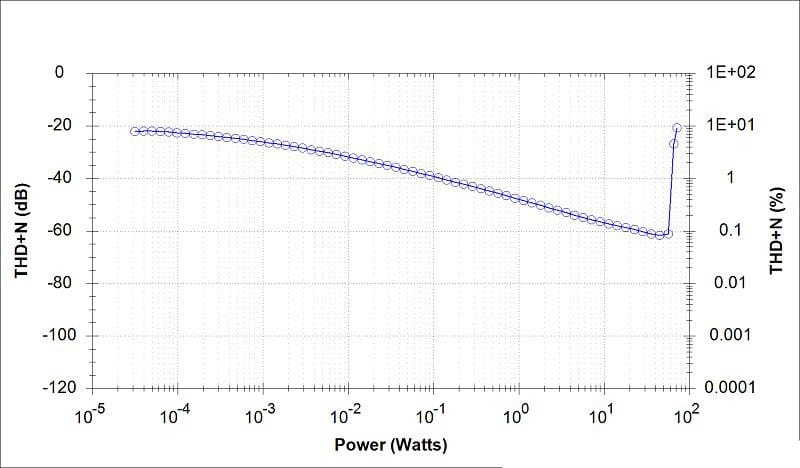
From a perspective of performance, Rockford Fosgate rates the amp as having a bandwidth of 20 Hz to 20 kHz and a THD spec of < 1.0%. Having tested several Punch amplifiers in our labs, we know that they dramatically outperform these modest specifications. We’ve seen frequency response measurements that are within 3dB to well below 5 Hz, and THD numbers in the <0.02% range. Punch and Power series amplifiers not only measure well on the bench, but they also sound excellent.

Rockford Fosgate M2-200X2
The M2-200X2 is a two-channel amplifier designed to withstand the challenges of marine applications.

Marine Stereo Amplifier Features

The M2-200X2 is based on the same cast aluminum heatsink design as the Punch Series amplifiers. These high-mass heatsinks are a key component in determining reliability and thermal stability at high power levels. Indeed, there are many compact amps on the market that make similar power claims. However, we doubt they will play at full power for more than 30 minutes without overheating.

The M2-200X2 has a footprint of 6.8 by 8.1 inches and stands 1.9 inches tall. All the power, signal and speaker connections are made along the front edge of the amp to keep the installation tidy. Angled terminal blocks accept 4-AWG power and ground connections, while a smaller block accommodates at least 12-AWG speaker cables.

The amplifier has a pair of RCA input jacks that will accept up to 4 volts. Adjacent to the speaker jacks is a Molex plug for speaker-level inputs. This will take up to 12 volts of signal. The amp has an Auto Remote Turn-On feature that monitors the inputs for the presence of the BTL offset voltage from a head unit or similar amplifier. This is an excellent feature if your installer is connecting the amp to a radio that doesn’t have RCA outputs.

Rockford Fosgate M2-200X2
Power, signal and speaker connections are made via zinc-coated brass terminals along the front edge of the amp.

Signal Processing

The Rockford Fosgate M2-200X2 has a variable crossover that can be adjusted from 50 Hz to 250 Hz. The slope is -12 dB per Octave and features a Butterworth alignment. A switch on the top of the amp allows your installer to select between high-pass or low-pass operation, or to bypass the filtering completely.

The M2-200X2 features Rockford Fosgate’s C.L.E.A.N. circuit on both the input and output, allowing your installer to optimize the amplifier’s power and noise performance. The C.L.E.A.N. LED indicators illuminate when maximum power is achieved.

Element Ready Design

Rockford Fosgate rates the M2-200X2 as being Element Ready. In this application, the amp is constructed with corrosion-resistant materials like a UV-resistant powder-coated cast aluminum heatsink and corrosion-resistant zinc nickel-plated brass hardware. Where the moniker becomes more critical is the use of a conformal coating on the circuit board to prevent corrosion in environments with high salt content. Furthermore, the board and its attached components can withstand impacts and vibrations that would cause problems with lesser products. If your boat takes a pounding as you jump over waves, then this physical stability is crucial to the longevity of your marine audio system.

Rockford Fosgate M2-200X2
The M2-200X2 includes mounting hardware and a hex key to make installation straightforward.

Upgrade Your Boat with Rockford Fosgate Marine Audio

If you are shopping for a great-sounding, reliable amplifier to upgrade your marine audio system, drop by a local authorized Rockford Fosgate retailer and ask about the M2-200X2. This stereo amplifier is an ideal solution for powering a few sets of speakers or a subwoofer. In fact, running two of them would make for a perfect two-way marine audio system that can play for hours and hours.

Visit the Rockford Fosgate website and use their dealer locator to find a shop near where you live. While online, be sure to follow Rockford Fosgate on Facebook, Instagram and YouTube to learn about their impressive marine audio upgrade solutions.

This article is written and produced by the team at www.BestCarAudio.com. Reproduction or use of any kind is prohibited without the express written permission of 1sixty8 media.
Filed Under: ARTICLES, Car Audio, PRODUCTS, RESOURCE LIBRARY Tagged With: Rockford Fosgate

Why are Speakers Different Sizes?

Speakers Different SizesWhen you head to your local mobile electronics specialist in search of new speakers, there are a few criteria to keep in mind. Choosing a speaker size can go one of two ways: You can pick something that fits a specific mounting location or you can choose based on the characteristics of the speaker relative to its size. Are you interested in knowing why speakers come in different sizes? Good! You’ve come to the right place.

What Does a Speaker Do?

It is the job of a speaker to convert the electrical signal from your amplifier into motion. The motion of the speaker cone excites the air around it. As the cone moves forward, the air in front of the cone is pressurized. As the cone moves rearward, the air is rarefied. These pressure waves extend out from the speaker and our ears detect these minute changes in pressure as sound. Pretty simple, isn’t it?

Things to Consider in Terms of Reproducing Sound

Speakers Different SizesWhen it comes to reproducing sounds, the lower the frequency, the harder it is to produce the sound. For every doubling of frequency, the speaker cone has to move a quarter the distance to produce the same level of output. As example, if your subwoofer has to move 2 mm to produce 95 dB of output and 40 Hz, it only has to move 0.5 mm to reproduce 95 dB at 80 Hz. To reproduce 95 dB of output at 160 Hz, the cone only has to move 0.125 mm.

The size of a speaker cone affects how much sound the speaker will create for a given amount of input signal. Let’s generalize things a little (because a lot of external factors affect this statement): A 12-inch speaker cone has to move twice as far as a 15-inch speaker cone to produce the same amount of output at a given frequency. That also means the 12-inch speaker requires more power to produce the same sound as the 15-inch.

Bigger is Always Better, Right?

Based on this logic, you should simply select the biggest possible speaker for every application, right? Well, it’s not quite that easy. When we get into midrange and high frequencies, the speaker cone has to move back and forth very fast. A 1,000 Hz tone requires that the speaker move forward and backward 1,000 times a second. A 10 kHz tone requires 10,000 of these same motions per second. If we use a big speaker with a relatively heavy cone, it’s very hard to keep up with the input signal. Why? Inertia.

Speakers Different SizesLet’s use an analogy to help explain this. Imagine that you are at a parade and waving a flag. The pole is 6 feet long and the flag on the end is 3×5-foot. You wave the flag back and forth as fast as you can. Even if you are really strong, the fastest you can wave it back and forth is once, maybe twice a second. Now, look at the little kid standing beside you at the parade. He has a little paper flag that’s 2×3 inches on a 5-inch-long plastic stick. His little hands can wave that flag back and forth five or six times a second.

Speaker engineers have to balance several characteristics to achieve specific goals for a given design. Let’s compare the weight of a speaker cone for a 10-inch subwoofer to that of a 10-inch midrange used in concerts and public address systems. A typical 10-inch sub that is designed to play frequencies below 150 Hz has a cone assembly (cone, voice coil, former, half the spider and half the surround) that weighs around 150 grams. A 10-inch speaker designed to be used for midrange frequencies (150 to 1 kHz) has a cone mass assembly of around 40 grams.

Clearly, the lighter assembly can move faster and keep up with the reproduction of higher frequencies.

Is Lighter Better?

Now we face the conundrum of balancing low- vs. high-frequency output. A lighter cone will move faster and is capable of producing extended high-frequency output. A heavier cone has a lower resonant frequency and thus, can produce more low-frequency output. Combine these generalizations with electrical issues affecting voice coil inductance, and we further hinder high-frequency output. It starts to become clear that we need different-sized speakers for different applications.

Subwoofers

Speakers Different SizesMost subwoofers are sized from 8 to 18 inches. Since subwoofers are designed to play frequencies below 100 Hz in car audio applications, they need a lot of excursion capability and a low resonant frequency. This means subwoofers will have relatively heavy cones. At high excursion levels, cones are exposed to significant stresses, so the cone has to be strong, and this further contributes to their weight. Subwoofers have to handle a lot of power. This power allows us to move the cone over relatively large distances. Power handling requires bigger components in the form of large-diameter voice-coil formers and windings.

Midbass Drivers

Speakers Different SizesA dedicated midbass driver is typically designed to play from around 50 to 500 Hz. Sizes are typically 6.5 to 8 inches in size, but some people have used 10- and 12-inch drivers. The cone has to be heavier than that of a midrange, but not heavy enough to slow it down for higher frequencies.

If you look at the frequency content of a performer, you will see that many voices extend down to 100 Hz. Accuracy in speed is important in this frequency range. Resonances and non-linear behavior causes harmonic distortion. This is often perceived as “warmth” in the midbass region. We do not want anything extra in our music, so accuracy is what matters.

Midrange Speakers

Speakers Different SizesMidrange speakers become a balancing act of several different characteristics. Of course, the cone has to be relatively light, but managing linearity and distortion becomes an even higher priority. It’s easier to hear distortion at midrange frequencies. The cone has to balance mass, damping and strength to prevent deforming and cause harmonics. The suspension has to be very linear.

Managing inductance also becomes a more significant issue because it can reduce high frequency output. Midrange drivers for typical car audio applications vary in size from 6.5 inches and 6×9 inches on the large side down to as small as 2.5 inches. Many midrange drivers try to do double-duty as midbass drivers for use in two- or three-way audio systems. While this is a minor compromise, it is a necessity. We consider midrange speakers to cover the range from 100 Hz to 3,000 or 4,000 Hz.

Tweeters

Speakers Different SizesTo reproduce frequencies above 2.5 kHz, tweeters need very light cones. Tweeter cones don’t move very far, so they don’t require much excursion, but there still has to be a suspension. Resonances in the cone can wreak havoc with frequency response. Premium tweeters may make use of features like ferrofluid in the gap to improve power handling. Premium tweeters may also include a copper pole-piece cap to reduce inductance and distortion.

Directivity Considerations

Another consideration when choosing speakers is that all speakers above a certain frequency start to become directional. Directivity refers to a reduction in high-frequency output as you move off-axis to the speaker. If you choose your speakers and design your system carefully, you can minimize the effect of directivity. The only real consideration would be to have your tweeters pointed at you.

The Balancing Act

The applications for the information in this article vary, depending on your overall goal for your audio system upgrade. A simple set of coaxial replacement speakers will be chosen by the size application. If you are building a high-end audio system with multiple amplifiers, channels, digital signal processing and custom speaker mounting locations, then choosing the right speakers in terms of their quality and intended application becomes more important.

Learn More about Speakers and Their Different Sizes at Your Local Retailer

Your local mobile electronics specialist retailer can help you choose the right speakers for your application and performance goals. Drop in at a local shop today and have a listen to their demo board or demo vehicle. It’s an amazing experience!

This article is written and produced by the team at www.BestCarAudio.com. Reproduction or use of any kind is prohibited without the express written permission of 1sixty8 media.
Filed Under: ARTICLES, Car Audio, RESOURCE LIBRARY

  • 1
  • 2
  • 3
  • …
  • 16
  • Next Page »

Recent Articles

A woman looking at various types of remote starters

Choosing the Best Car Starter Remote

December 8, 2025 

Under the hood, most remote car starters are very similar. Most brands offer two or three different controllers and allow the shop you work with to bundle those units with … [Read More...]

The steering wheel and dash of a vehicle

Basics of OEM Integration in Your Newer Vehicle

December 7, 2025 

Installing a mobile audio system involves much more than just hooking up some wires and driving in a few screws. Almost all vehicle manufacturers have realized that some amount of … [Read More...]

Rockford Fosgate PM400X4

Product Spotlight: Rockford Fosgate PM400X4

November 17, 2025 

Contrary to how some marine audio amplifier manufacturers approach the design of their products, an amplifier designed for a boat isn’t just painted a different color. From … [Read More...]

Rockford Fosgate M2-200X2

Product Spotlight: Rockford Fosgate M2-200X2

November 10, 2025 

Having a great-sounding audio system on your boat is one of the best ways to improve your time on the lake or ocean. Rockford Fosgate is an industry leader in marine audio … [Read More...]

Various speaker sizes

Why are Speakers Different Sizes?

November 2, 2025 

When you head to your local mobile electronics specialist in search of new speakers, there are a few criteria to keep in mind. Choosing a speaker size can go one of two ways: You … [Read More...]

Subscribe!

Enter your email address to subscribe to our website and receive notifications of new posts by email.

Join 8 other subscribers

Testimonials

Nice staff and honor their work

Audio Crew did some work for me about 2yrs ago. A speaker they installed wasn't working properly. They checked it out and problem was a corroded wire. They fixed the problem and told me no charge for the repair. Very nice of them to do that as problem wasn't their fault in the first place. Audio Crew have a nice staff and honor their work.

VERY HONEST and PROFESSIONAL company

I purchased a 2019 used car for my wife and she wanted a remote started installed. I went to Audio Crew, who I had dealt with before, got a price and made an appointment. We dropped the car off the night before, for the appointment with a request that they call us when ready. Early the next morning, I received a call telling me that there was good news!! The car already had a remote starter which was programmed into the factory remote. We only need to press the "lock" button three times to star the car!! The dealer who sold us the car was not aware of that, it was a pleasant surprise to us and a $350 savings. THANK YOU to a VERY HONEST and PROFESSIONAL company.

Absolutely the best service

Absolutely the best service you will get anywhere. They go above and beyond! Can’t recommend them more! They fixed our issue quickly. Super friendly and helpful. Will not buy anywhere else.

Great Service

Great service, huge demo room with great prices. Very knowledgeable and professional service from the owner and will work within your budget to help you achieve your goals in the sound system your looking for. Extremely great experience dealing with them, also pricing was excellent competitive prices.

Subscribe to Our Website

Enter your email address to subscribe to our website and receive notifications of new posts by email.

Location


Get Directions to Audio Crew

Address

Audio Crew

624 Salisbury Rd
Moncton, NB E1E 1B8
506-858-2739

Connect With Us

  • Facebook
  • Instagram

Services

  • Car Audio
  • Marine Audio
  • Motorcycle Audio
  • Remote Starters
  • UTV and Side-by-Side Upgrades

Store Hours

Monday, Tuesday, Wednesday, Thursday, Friday8:30 am – 5:00 pm

Copyright © 2025 Audio Crew · Privacy Policy · Website by 1sixty8 media · Log in


Loading Comments...