Audio Crew

Serving the Greater Moncton Area and All of New Brunswick

624 Salisbury Rd, Moncton, NB E1E 1B8, Canada 506-858-2739
  • Home
  • Services
    • Car Audio
    • Marine Audio
    • Motorcycle Audio
    • Remote Starters
    • UTV and Side-by-Side Upgrades
  • About Us
  • Location
  • Contact Us
  • Facebook
  • Instagram

Rockford Fosgate Punch Speakers Fit Many Applications

Punch Speakers

The new Punch Series speakers from Rockford Fosgate have been designed with features, performance and application solutions that are nearly unmatched in the car audio industry. From the high-quality materials and well-engineered design to the way they fit in different vehicles, these are truly high-end solutions. Let’s take a look at why Punch Series speakers likely have a solution that’s perfect for your application.

Three Series, Perfect Fitment

The new Punch Series speakers from Rockford Fosgate are divided into three sub-categories: P1, P2, and P3. The P1 drivers are all coaxial solutions that include the two-way Tru-Sight tweeter design, which helps ensure you hear the highest frequencies, no matter where or how the speaker is installed. The P1 series includes 2.5-, 3.5-, 4-, 5.25-, 6-, 6.25-, and 6.75-inch round models, along with 4×6-, 6×8-, and 6×9-inch oval models. If that doesn’t cover what you need, you must have a very unique vehicle.

Rockford Fosgate spent a great deal of time working on the chassis design for each new speaker. For example, the P1V2-65 6.5-inch driver, which is one of the most popular models, features Auto Fit Architecture. The basket mounting flange features 10 mounting-hole cutouts, making it easy for the driver to bolt up to most modern cars and trucks with no hassle. They call this the Factory Location Woofer Ring (F.L.W.R.).

Punch Speakers
The P1V2-65 is a three-way coaxial speaker that’s designed to make upgrading your car audio system easy.

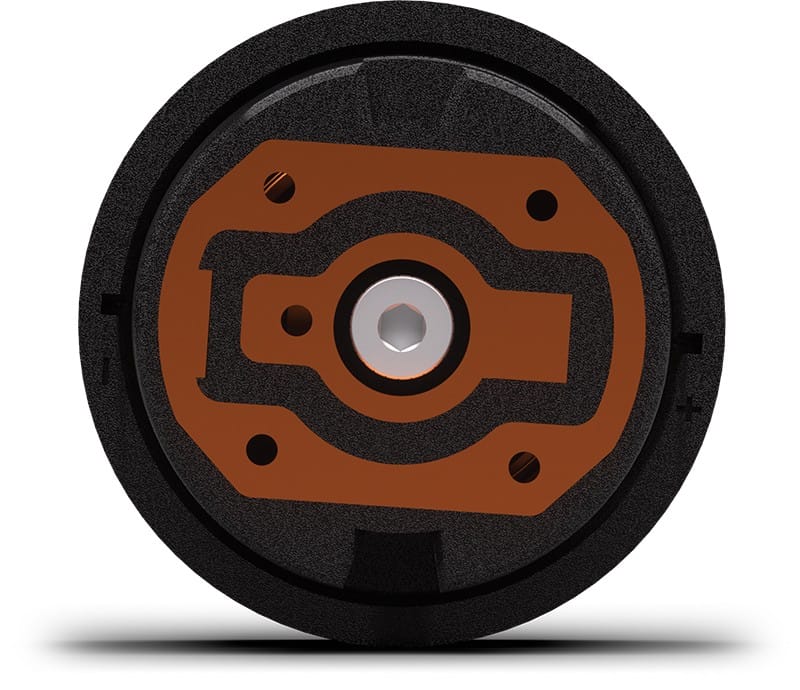
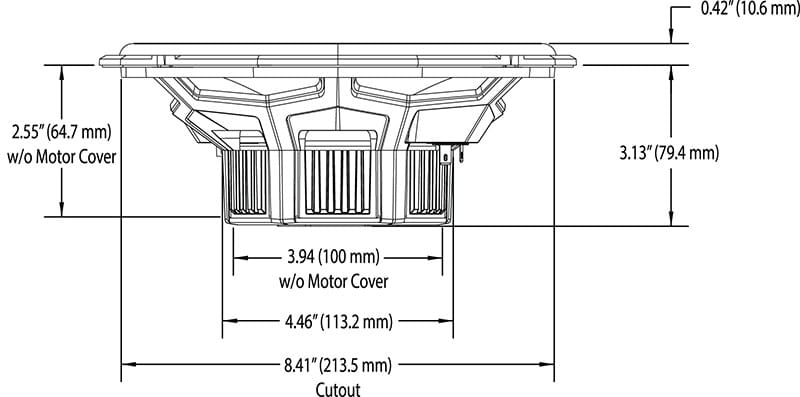
Further, they have made the magnet cover easily removable. For the P2V2-65, this reduces the mounting depth from 2.5 inches to 2.26 inches. This can be the difference between having to purchase spacer rings for a typical installation.

Punch Speakers
The magnet cover on the new Punch Series woofers can be removed to save 0.24 inches of mounting depth.

Component Speaker Solutions

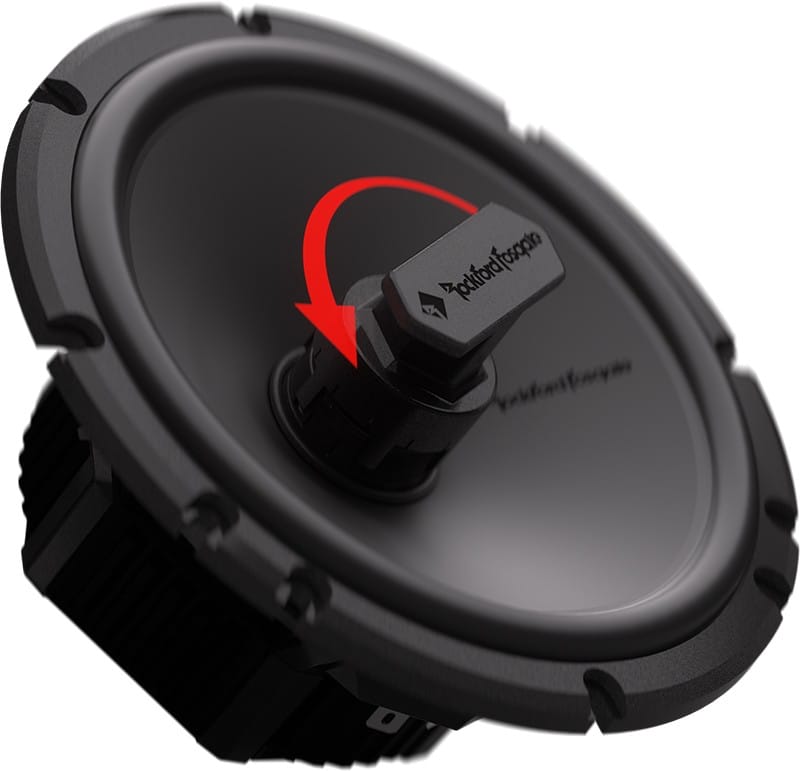
Moving up to the P2 series, the new Punch Series speakers adopt a convertible design. Your installer can mount the provided ¾-inch inverted dome tweeters anywhere you want in the vehicle, or affix them to the center of the provided woofer to make these a premium coaxial design. Rockford Fosgate calls this the Interchangeable Locking Mechanism (I.L.M.). They provide a tool to remove the phase plug from the center of the woofer so it can be replaced with a tweeter. The P2 series includes 6.5-, 6×8-, and 6×9-inch woofers and all the kits include the same ¾-inch Tetolon-dome tweeters.

The driver sets are also available in the speaker High Output (HO) offerings that feature 2-ohm voice coils. These are ideal if you are trying to maximize the power available from a small amplifier or a high-power source unit. In most cases, modern high-power amplifiers produce more than enough power to maximize these speakers’ performance when driving a four-ohm load.

Punch Speakers
Your installer can convert the P2 Series speakers from components to coaxials in a matter of seconds.

Three-Way Solutions for Better Sound

You may have noticed that most premium audio systems in modern cars and trucks feature a three-way front speaker system that includes woofers, midrange drivers, and tweeters. The benefit of this design is improved sound dispersion through the cabin. Further, there’s less distortion added at high output levels as the midrange driver experiences very little cone movement. Finally, the staging and imaging can be improved by mounting the midrange high in the door or in the dash. A three-way system is really the best choice if it will fit in your vehicle.

The Punch P3 Series of speakers are three-way solutions that come in four configurations. The P3V2-65 set includes a pair of 6.5-inch woofers, two 2.5-inch midrange drivers and a pair of ¾-inch tweeters. The P3V2-69 set is similar, but trades the round woofers for a set of 6×9-inch oval drivers. The midrange drivers are ideal for applications from General Motors, Jeep, Mercedes-Benz, Subaru and Toyota.

Punch Speakers
The 2.5-inch midrange in the P3V2-65 and P3V2-69 comes with a Factory Location Woofer Ring (F.L.W.R.) that simplifies installation.

The P3V2-69C2 set features the same 6×9-inch woofers and includes a set of the P1 2.5-inch coaxial speakers. Finally, the P3V2-69C3 set rounds out the solutions with 6×9-inch woofers and P1 3.5-inch coaxial drivers. These are great for modern pickup trucks, Jeep and Tesla audio system upgrades.

Stand-Alone Midrange

The P3 Series has one last trick up its sleeve. The P3V2-25 is a set of 2.5-inch midrange drivers. These are the same as those used in the P3V2-65 and P3V2-69 sets. If you have one of the P2 Series convertible component sets and want to upgrade them to a three-way solution, the P3V2-25 are ready to go. If your installer is building something custom, the flush-mount GF-25 grilles or surface-mount GS-25 mesh grilles are available to give the installation a clean, tidy appearance. Grilles are also available for 6.5- and 6×9-inch size woofers.

Punch Speakers
The P3V2-25 2.5-inch speaker set can be used to upgrade the P2 Series components to a three-way system.

Speaker Upgrades for Your Vehicle

As we said, there’s likely a Punch Series speaker designed specifically for your car or truck, delivering a huge upgrade in audio performance. From three-way coaxials to elaborate multi-driver component solutions, your local Rockford Fosgate retailer can find a solution that will let your audio system play louder and sound better. You can find a local retailer using the Dealer Locator tool on the Rockford Fosgate website.

This article is written and produced by the team at www.BestCarAudio.com. Reproduction or use of any kind is prohibited without the express written permission of 1sixty8 media.

Filed Under: ARTICLES, Car Audio, PRODUCTS, RESOURCE LIBRARY Tagged With: Rockford Fosgate

The Importance of GPS Tracking

GPS Tracking

Automobile theft has been a major concern over the last few years. Vehicles from Lexus, Toyota, Kia, and Hyundai have been key targets for criminals. Aside from a premium security system, GPS tracking is the best investment if you hope to get a stolen vehicle returned. Let’s look at the automotive theft process and explain how a locating device can help get your car or truck back into your driveway.

Auto Thefts

There are a few ways that thieves steal modern vehicles. Some use a relay attack to capture signals from your key fob in your home and unlock the doors. From there, thieves connect to the vehicle’s computer systems, add a new key fob, and drive away in near silence. Top tip: Don’t keep your keys near the front door of your house.

When the bad guys can’t relay the unlock codes from your keys to the vehicle, they have to resort to more invasive processes. They may smash a window and climb through. They are smart enough to know not to open a door, as that will trigger most factory-installed security systems. Once in, they program a new key fob and are on their way. The entire process takes only a few minutes, and brazen thieves commit their dastardly deeds even in broad daylight.

GPS Tracking
YouTube star Tom Bailey inspecting the interior of his stolen and recovered Dodge Ram TRX.

What Happens to a Stolen Vehicle?

Most thieves follow a simple process once the vehicle is stolen. They drive it out of the city it was stolen from and park it in a public place for a day or so. Why? They are checking whether there is a tracking system that will lead the police to the vehicle. One of our team members who listens to police scanners has heard law enforcement follow a stolen vehicle about 40 miles, only to find it parked at a recreation center a few cities away. This process is called “cooling off.”

If, after a day or so, the vehicle hasn’t moved, the thieves either drive it to a chop shop or place it in a container for shipment out of the country.

What About Factory-Installed Tracking?

Most new cars, trucks and SUVs have some form of smartphone-based keyless entry and vehicle-locating system. Aren’t these enough to get your car back? The short answer is no. Thieves know exactly how these systems work and where components like the antenna are located. They disable these either before the vehicle is stolen or when it’s parked to wait. Don’t underestimate the effort bad guys put into preparing to steal a vehicle.

GPS Tracking
An example of a GPS antenna that was smashed prior to a theft attempt.

Aftermarket Vehicle Tracking Solutions

It’s safest to assume that criminals know everything about the cars they want to steal. As such, the only way to get your car back is to use an aftermarket tracking device. Firstech, the manufacturer of the Drone telematics system, has recently launched a product designed specifically to track new cars, trucks, SUVs, boats, personal watercraft and powersports equipment – the Drone XT. Drone XT is a smart tracking solution that works with the DroneMobile smartphone app and website to let you keep tabs on your belongings.

Having a Drone XT installed in your car or truck lets you check your vehicle’s location in seconds. Just open the app or visit the website, and you’ll know where the vehicle is located. You can even see a breadcrumb trail of where it’s been, had it been moving.

What sets Drone XT apart from other options? First, it will alert you when the vehicle moves. There’s a small geofence around the parked location, so you won’t be annoyed by small variances caused by GPS signal strength variations. If the system is hardwired to the vehicle via the included USB-C cable, you’ll receive a notification when the engine starts or shuts off.

The system incorporates several environmental sensors that will also trigger alerts on the owner’s smartphone. There’s temperature, humidity and even a light sensor. When any of these detect an abrupt change, you’ll know about it seconds later.

GPS Tracking
Aside from location tracking, the Drone XT includes temperature, humidity and light sensors that deliver instant alerts to the owner.

While we are focusing on auto theft, the Drone XT is a perfect solution for motorcycles, boats or a trailer, thanks to its built-in 2,200 mAh battery pack. The system can operate for up to three weeks in Energy Saving mode. It lasts for up to 10 months in Deep Sleep mode. If you are worried about someone stealing a motorcycle while you are on a road trip, Drone XT is a perfect solution.

GPS Tracking
Motorcycle thefts are common, especially when left outdoors. GPS tracking is a good investment to protect your ride.

The Importance of Proper Installation

You may recall that we emphasized how well thieves know the wiring in the cars and trucks they steal. If you have a tracking solution installed, it’s only as effective if the bad guys don’t find it. For example, power wires tapped into the fuse panel will lead criminals to the tracking device’s location, making it easy to defeat.

As with any automotive accessory upgrade, you need to be picky about who works on your vehicle. You want to choose a shop that will take the time to integrate all the wiring into the factory harnesses, using the same cloth or vinyl tapes the vehicle manufacturer uses. You’ll want to ensure that a mounting location is chosen that conceals the unit from view, even if access panels are removed, or major components like the radio are removed from the dash. Skimping on a high-quality installation can render the solution useless.

Protect Your Vehicle with a GPS-Based Tracking System

If you are worried about someone stealing your vehicle or weekend toys, then visit a local authorized Drone retailer and ask about having a Drone XT installed. You can find a retailer near you using the locator tool on the Dronemobile.com website.

Be sure to follow the DroneMobile team on Facebook, Instagram, and YouTube to learn more about the vehicle security and convenience solutions they offer.

This article is written and produced by the team at www.BestCarAudio.com. Reproduction or use of any kind is prohibited without the express written permission of 1sixty8 media.

Filed Under: ARTICLES, Car Audio, PRODUCTS, RESOURCE LIBRARY Tagged With: DroneMobile

Understanding Specifications: Operating Voltage Tolerances and Protection Circuits

Operating Voltage

To close out our series of educational articles on amplifier specifications, we are going to talk about operating voltage limits and, by association, the protection circuits built into a car audio amplifier. In the good old days of electrical systems that were composed of an alternator, battery, switches and a couple of relays, delivering a relatively constant voltage to a car audio amplifier was easy. New technologies and limits on battery, alternator and wire size have made it much more difficult to keep our amplifiers happy.

Automotive Start-Stop Systems Cause Low Operating Voltage

Operating VoltageWith the never-ending battle to eke out every ounce of fuel efficiency from the vehicles we drive, automakers have resorted to systems that will shut down the engine to save fuel while idling. Transitioning from standard idle mode to the shut-down state doesn’t pose a problem for most amplifiers as the battery voltage only drops to the 12.2 to 11.5-volt range. If the voltage starts to drop because the car has been idling too long, the engine will restart automatically.

Operating VoltageWhat poses a problem for modern car audio amplifiers are the voltage dips associated with the engine starting. In conventional vehicles, the stereo is off while you are starting the vehicle. These start-stop systems keep everything running and playing as the engine restarts. Electrical system voltage can drop below seven volts while the engine cranks. Many amplifiers shut themselves down below nine or ten volts, and as such, your music would stop playing. While a pause in your music isn’t truly problematic, it can be annoying if you are stuck in stop-and-go traffic.

New amplifier designs include circuitry that will keep the amplifier active during brief low operating voltage conditions. Some companies specify their amps as being able to handle as little as 6 volts for as long as 5 seconds to ensure that your music plays without interruption. This same start-stop compliance design is required for digital signal processors to prevent them from shutting down during engine restarts.

Car Audio Amplifier Protection Circuitry

Operating VoltageThree decades ago, if you shorted the outputs of an amplifier, it would blow up, occasionally with spectacular results. Modern amplifiers include protection circuits that monitor different functions and automatically shut the amp down when an unwanted condition occurs. Most amplifiers include protection against overheating or short circuits on the speaker wires. Better amplifiers may provide a warning if a power connection over-voltage condition occurs that could damage the components inside the amp.

A select few manufacturers provide computerized monitoring of different parts of their amplifiers and flash error codes to let users know why the amp is in protection. Short circuits, over-voltage, under-voltage, over-temperature on the power supply and output stage and a notification about repeated short circuits are provided. This information makes it much easier and more efficient for a technician to troubleshoot an installation or speaker issue.

How Car Audio Amplifiers Handle Over-Temperature Conditions

Operating VoltageThere are two ways for an amplifier to protect itself if it gets too hot. The most common mode is for the amp to stop playing music so that the power supply and output switching devices can cool off. The second option is for the amp to reduce the output signal so that less heat is created. While it’s nice that your music won’t stop playing, most consumers tend to try and turn the volume up higher when the music gets quieter. Eventually, amplifiers that roll back power will go into a state of full protection and shut themselves down to protect components.

If you live in an area that gets hot during the summer, choosing an amplifier with adequate cooling from a large heatsink or a fan is a good idea. Cramming a tiny little amp into the corner of your trunk or cargo area may not be the best choice in this situation.

Visit Your Local Mobile Enhancement Retailer Today

If you are interested in upgrading the audio system in your car, truck or SUV, purchasing a new amplifier will be a fundamental part of the process. Your local specialist car stereo shop can help you wade through the hundreds of amplifier options on the market to find a solution that sounds amazing and works with your budget and performance expectations.

This article is written and produced by the team at www.BestCarAudio.com. Reproduction or use of any kind is prohibited without the express written permission of 1sixty8 media.

Filed Under: ARTICLES, Car Audio, RESOURCE LIBRARY

Car Audio Amplifier Remote Control Options

Amp Remote

If you are thinking about having your local mobile enhancement retailer add a subwoofer amplifier to your car or truck, you may want to ask them about the remote level or bass boost control options that are available. Being able to adjust the amount of bass your system produces from the driver’s seat allows you to fine-tune the system for the music you are listening to or your mood. Let’s look at five of the most popular options available to adjust the output of a new subwoofer system.

Dedicated Remote Level Control

Amp RemoteMany subwoofer amplifiers have a built-in jack that your installer can connect to an included (or optional) remote level control. In most cases, these are RJ11 jacks, similar to what home phones use. The remote includes a long cable that can be run to a location on the dash or center console where the knob or control panel can be installed.

How the remote works is important to the overall reliability of your sound system. To prevent distortion from clipping, the remote should ideally only serve as an attenuator. Your installer will configure the system to produce maximum power from the amp with the level control turned up all the way, then you can turn it down to suit your listening preferences.

Digital Signal Processor Remote Controls

Amp RemoteAlmost all DSP manufacturers offer some sort of remote control that is compatible with their processors. These remotes can serve as master volume controls or subwoofer level controls and can usually select different presets if the processor supports that function. Whether the processor is a stand-alone system or integrated into an amp, adding a remote is a great choice.

Some processors have provisions to add a remote control that can be assigned to specific channels and operate over a specific range. This remote can be configured to act as a level control for a subwoofer, a center-channel speaker or rear speakers, depending on how the system is configured. This style of remote can also serve as a master volume control for the amplifier in instances where you are not using a radio with a volume knob as a source. This single knob is often easier to use and much less expensive than a full controller.

Remote Bass Boost Controls

Amp RemoteSome inexpensive amplifiers come with a remote bass boost control. These controls work in the same way as the adjustment potentiometer on the side of an amp to apply a narrow EQ band of signal boost to the audio signal.

There are two problems with bass boost controls. First, they increase the output of the amp, so your system needs to be tuned with the control at its maximum setting. This configuration makes it difficult to blend the sound of the subwoofer with the mid-bass speakers. Secondly, using large amounts of boost often sounds unnatural. Boosting the region around 45 or 50 Hz is a lot of fun, but the audio information down at 25 and 30 Hz and up at 70 to 80 Hz is just as important. Ideally, a remote level control is a much better choice than a bass boost control.

Source Unit Subwoofer Level Controls

Amp RemoteIf you have upgraded your sound system with a new radio or multimedia receiver, most include a subwoofer output level adjustment in the audio configuration menu. It’s worth noting that these radios typically don’t produce their maximum output signal on the subwoofer preamp connections unless the subwoofer level control is at its highest setting.

Many years ago, a radio manufacturer placed a rocker switch on the front panel of one of their radios that provided direct access to the subwoofer output level. This was a truly genius idea! These days, you have to press a few buttons or navigate a menu option or two to access the adjustment menu.

Integration Processor Level Controls

Many audio integration processors and converters (often called Line Output Converters or Line Level Converters) have an option for an external remote level control. Depending on the design of these processors, the output controlled by the knob could be paralleled off of a single stereo input, or be from a second dedicated input. If your audio system needs a processor to take the signal from the factory radio or amplifier and turn it into something the amp can use, look for something with a remote level control.

Upgrade Your Car Audio System Today!

Upgrading an existing subwoofer or adding one to your factory car stereo is the most dramatic improvement you can make to your mobile audio system. Alleviating the need for the small speakers in your doors, dash or rear parcel shelf to try to produce bass makes them sound better, play louder and last longer. Drop by your local specialist mobile enhancement retailer today to find out how you can add a subwoofer enclosure and amplifier with remote level control to your car stereo system.

This article is written and produced by the team at www.BestCarAudio.com. Reproduction or use of any kind is prohibited without the express written permission of 1sixty8 media.

Filed Under: ARTICLES, Car Audio, RESOURCE LIBRARY

Understanding Specifications: Class AB Car Audio Amplifier Crossover Distortion

Crossover Distortion

We are at our second-to-last article in our car audio amplifier specification series and this time, we are going to talk about Class AB amplifier crossover distortion. This distortion has nothing to do with the high- or low-pass filters built into your amplifier; it’s a problem with the very concept of the Class B amplifier topology. Don’t fret — we’ll explain what causes it and how it’s minimized to a level of near inaudibility.

How Do Class AB Amplifiers Work?

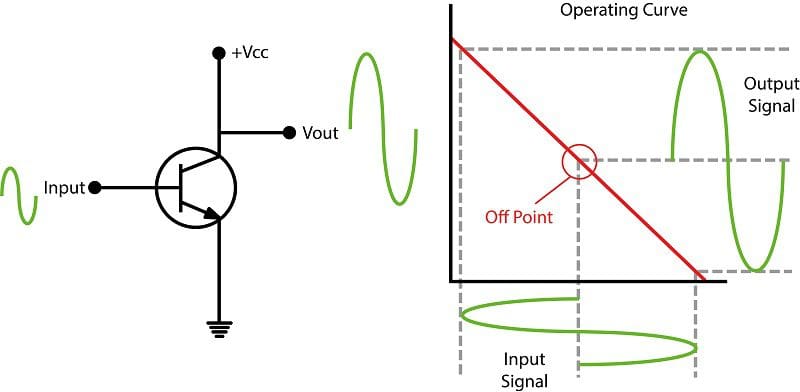
Before we can explain what crossover distortion is, you’ll need a basic understanding of how the output of a Class AB amplifier works. In a Class A amplifier, a single transistor (or bank of transistors) takes care of controlling the voltage going to the speaker. When no signal is being produced, the transistor is set at a 50% output level (and gets VERY hot). As the alternating current (AC) from the signal source passes through the amp, the output voltage goes up and down until it reaches the maximum or minimum possible level associated with the transistor being off or at its maximum output level.
Crossover Distortion
A very basic diagram of how a Class A amplifier works.

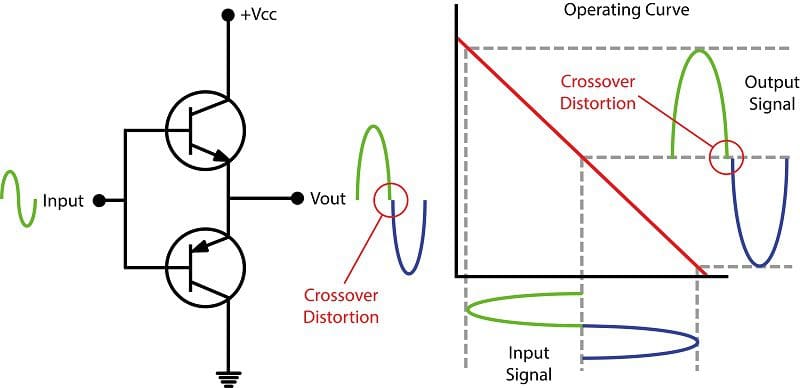
In a Class B amplifier, we use one transistor to handle the positive half of the waveform and a second transistor to handle the negative half. The primary advantage is that when there is no signal present, both devices are almost completely turned off and very little power is consumed.
Crossover Distortion
A basic diagram of a Class B output stage without any biasing on the transistors.

The Class B topology is where our crossover distortion problem arises. As the audio signal swings from positive to negative, it needs to switch from one device to the other without any issues. It’s at this point where the signal crosses over from one device to the other that problems can happen — hence the name, crossover distortion.

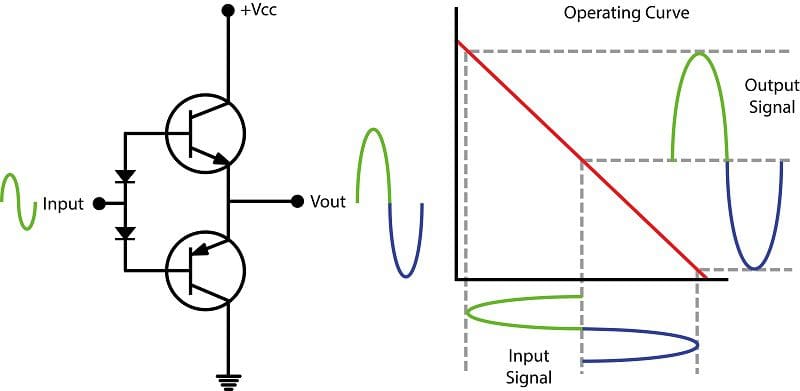
Amplifier designers who truly care about the sonic qualities of their products know how to handle this transition and can effectively eliminate crossover distortion by biasing the positive and negative output devices into their active regions. While this does create a little more heat, it reduces distortion dramatically. This is where the Class A part of an AB amplifier comes from: The devices are turned on a little bit (like a Class A amp), but for high-level signals, act in a Class B configuration.
 

Crossover Distortion
A basic diagram of a Class AB output stage.

Why Does Crossover Distortion Matter?

At low output levels, even in moderate-quality Class AB amplifiers, crossover distortion is more prevalent than when an amplifier is producing very low amounts of power. More accurately, the effect of crossover distortion decreases as the output level increases.

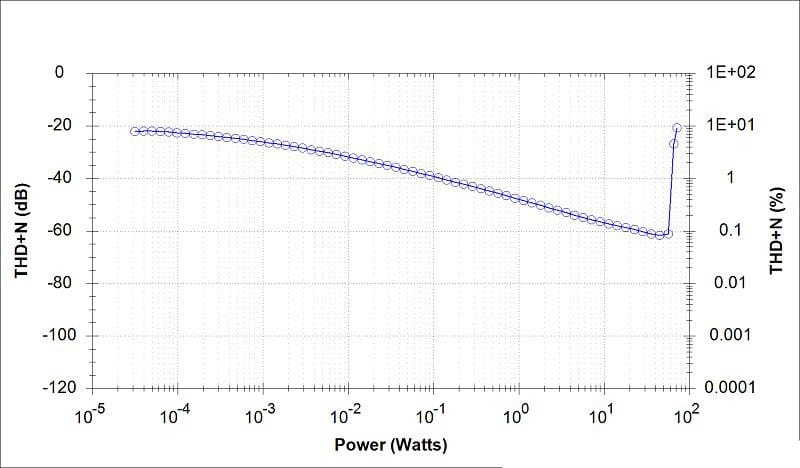
Let’s look at the distortion characteristics of three different amplifier topologies to gain a better understanding of that statement. Up first is our truly outrageous low-quality four-channel amplifier. This workhorse of mediocrity has served us well through this series in explaining the kind of harmonic distortion versus its output level.
Crossover Distortion
This wretched amplifier produces more than 1% distortion below 1 watt of power into a 4-ohm load. As is common, the distortion is least just before the amp goes into clipping around 55 watts per channel.

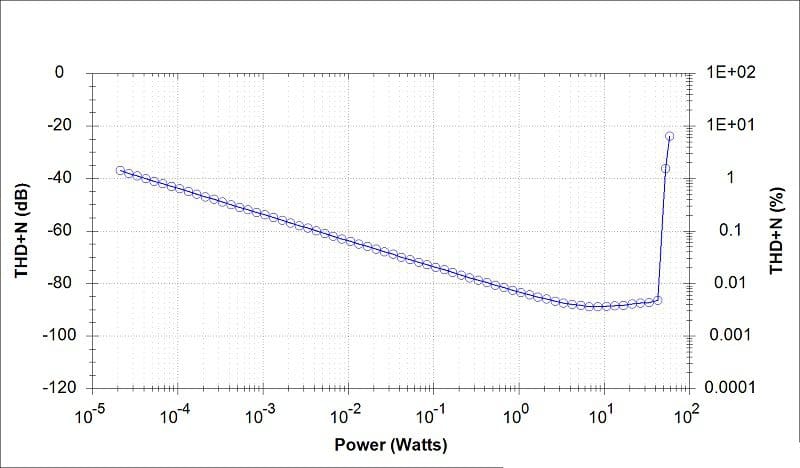
For a stark and dramatic contrast, we’ll switch to our high-end amplifier. This amplifier is unique in that it uses a high-bias design intended specifically to reduce crossover distortion in the transition between the positive and negative output devices. The graph below shows the distortion of 0.09% versus the output level.
Crossover Distortion
Our high-quality amp doesn’t reach 1% distortion until the output level drops below 0.000015 watts. This amplifier produced the lowest levels of distortion at just below 10 watts power with a measurement of 0.006%. That’s almost seven times less!

Choosing the Right Amplifier for Your Audio System

If the goals for your audio system are world-class performance, and you intend to use Class AB amplifiers, you can reduce the effects of crossover distortion by matching the power requirements of your speakers with amplifiers that will operate higher in their output range. For example, if you want a 150-watts-per-channel amp for your mid-bass drivers, you may only need a 50-watt amp for your midrange speakers and a 10-watt amp for your tweeters to achieve the same acoustic output level. BestCarAudio.com published an article on speaker power handling that explains why.

While you can’t always choose high-quality amplifiers with extremely low power levels, you can minimize the effect of crossover distortion by not using a monster amp on your tweeters. Your local specialist mobile enhancement retailer would be happy to design and install an amazing car audio system upgrade — drop by and talk to one of their Product Specialists today!

This article is written and produced by the team at www.BestCarAudio.com. Reproduction or use of any kind is prohibited without the express written permission of 1sixty8 media.
Filed Under: ARTICLES, Car Audio, RESOURCE LIBRARY

  • 1
  • 2
  • 3
  • …
  • 12
  • Next Page »

Recent Articles

Rockford Fosgate Punch Speakers

Rockford Fosgate Punch Speakers Fit Many Applications

July 13, 2026 

The new Punch Series speakers from Rockford Fosgate have been designed with features, performance and application solutions that are nearly unmatched in the car audio industry. … [Read More...]

A man breaking into a parked car on a city street and a phone with a Dronemobile system showing on it

The Importance of GPS Tracking

July 6, 2026 

Automobile theft has been a major concern over the last few years. Vehicles from Lexus, Toyota, Kia, and Hyundai have been key targets for criminals. Aside from a premium security … [Read More...]

A man testing the battery voltage on a vehicle

Understanding Specifications: Operating Voltage Tolerances and Protection Circuits

July 5, 2026 

To close out our series of educational articles on amplifier specifications, we are going to talk about operating voltage limits and, by association, the protection circuits built … [Read More...]

Remote Level Control

Car Audio Amplifier Remote Control Options

June 7, 2026 

If you are thinking about having your local mobile enhancement retailer add a subwoofer amplifier to your car or truck, you may want to ask them about the remote level or bass … [Read More...]

Drone XT GPS Tracker

Product Spotlight: Drone XT GPS Tracker

June 1, 2026 

Protecting your vehicles or equipment has never been more important, and a GPS tracking system is one of the smartest upgrades you can make. The new Drone XT from Firstech gives … [Read More...]

Subscribe!

Enter your email address to subscribe to our website and receive notifications of new posts by email.

Join 8 other subscribers

Testimonials

Nice staff and honor their work

Audio Crew did some work for me about 2yrs ago. A speaker they installed wasn't working properly. They checked it out and problem was a corroded wire. They fixed the problem and told me no charge for the repair. Very nice of them to do that as problem wasn't their fault in the first place. Audio Crew have a nice staff and honor their work.

VERY HONEST and PROFESSIONAL company

I purchased a 2019 used car for my wife and she wanted a remote started installed. I went to Audio Crew, who I had dealt with before, got a price and made an appointment. We dropped the car off the night before, for the appointment with a request that they call us when ready. Early the next morning, I received a call telling me that there was good news!! The car already had a remote starter which was programmed into the factory remote. We only need to press the "lock" button three times to star the car!! The dealer who sold us the car was not aware of that, it was a pleasant surprise to us and a $350 savings. THANK YOU to a VERY HONEST and PROFESSIONAL company.

Absolutely the best service

Absolutely the best service you will get anywhere. They go above and beyond! Can’t recommend them more! They fixed our issue quickly. Super friendly and helpful. Will not buy anywhere else.

Great Service

Great service, huge demo room with great prices. Very knowledgeable and professional service from the owner and will work within your budget to help you achieve your goals in the sound system your looking for. Extremely great experience dealing with them, also pricing was excellent competitive prices.

Subscribe to Our Website

Enter your email address to subscribe to our website and receive notifications of new posts by email.

Location


Get Directions to Audio Crew

Address

Audio Crew

624 Salisbury Rd
Moncton, NB E1E 1B8
506-858-2739

Connect With Us

  • Facebook
  • Instagram

Services

  • Car Audio
  • Marine Audio
  • Motorcycle Audio
  • Remote Starters
  • UTV and Side-by-Side Upgrades

Store Hours

Monday, Tuesday, Wednesday, Thursday, Friday8:30 am – 5:00 pm

Copyright © 2026 Audio Crew · Privacy Policy · Website by 1sixty8 media · Log in

Loading Comments...