Audio Crew

Serving the Greater Moncton Area and All of New Brunswick

624 Salisbury Rd, Moncton, NB E1E 1B8, Canada 506-858-2739
  • Home
  • Services
    • Car Audio
    • Marine Audio
    • Motorcycle Audio
    • Remote Starters
    • UTV and Side-by-Side Upgrades
  • About Us
  • Location
  • Contact Us
  • Facebook
  • Instagram

Product Spotlight: Rockford Fosgate HD24BL69

Rockford Fosgate HD24BL69

The latest generation of Road Glide and Street Glide touring bikes from Harley-Davidson are now ready for a high-performance audio system upgrade thanks to Rockford Fosgate. We took a look at the Stage 2 and Stage 3 kits recently. Now it’s time for a deep dive into the HD24BL69 saddlebag speaker kits. Let’s check them out!

Features of the Rockford Fosgate HD24BL69

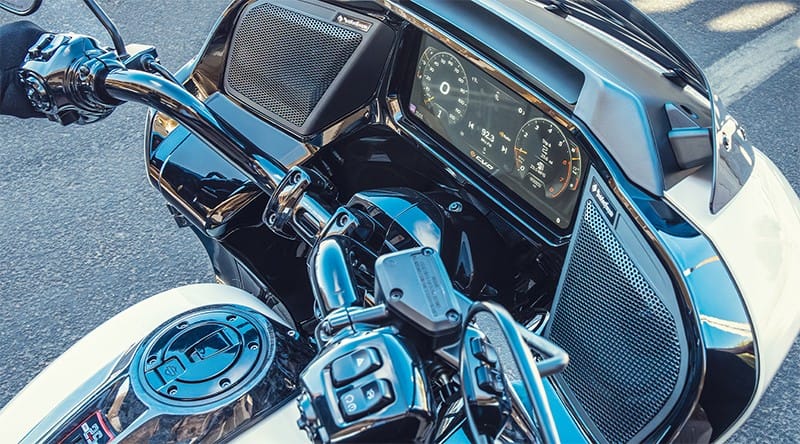
The Rockford Fosgate HD24BL69 is a cut-in speaker kit designed for 2024 and newer Road Glide and Street Glide bikes with the Skyline infotainment system and Harley-Davidson’s ABS saddlebags. You can check fitment for your bike using the compatibility chart on the product page.

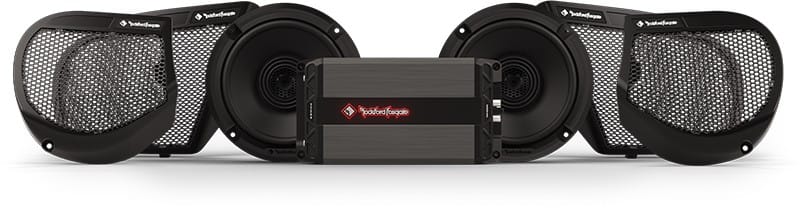
The kit includes a pair of the new TMS24-69 6×9-inch Element Ready speakers, a set of bag-lid grilles, the speaker bucket system, the lid cutting templates and a plug-and-play wire harness. The kits are compatible with the Power Lock Kit, so you can keep your gear safe.
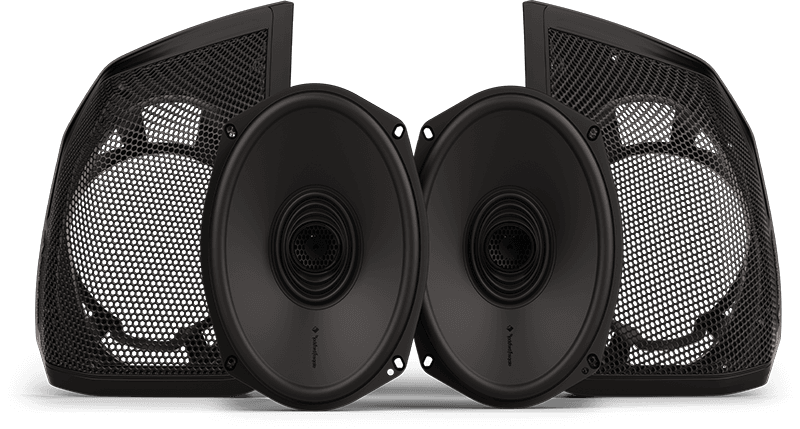
Rockford Fosgate HD24BL69
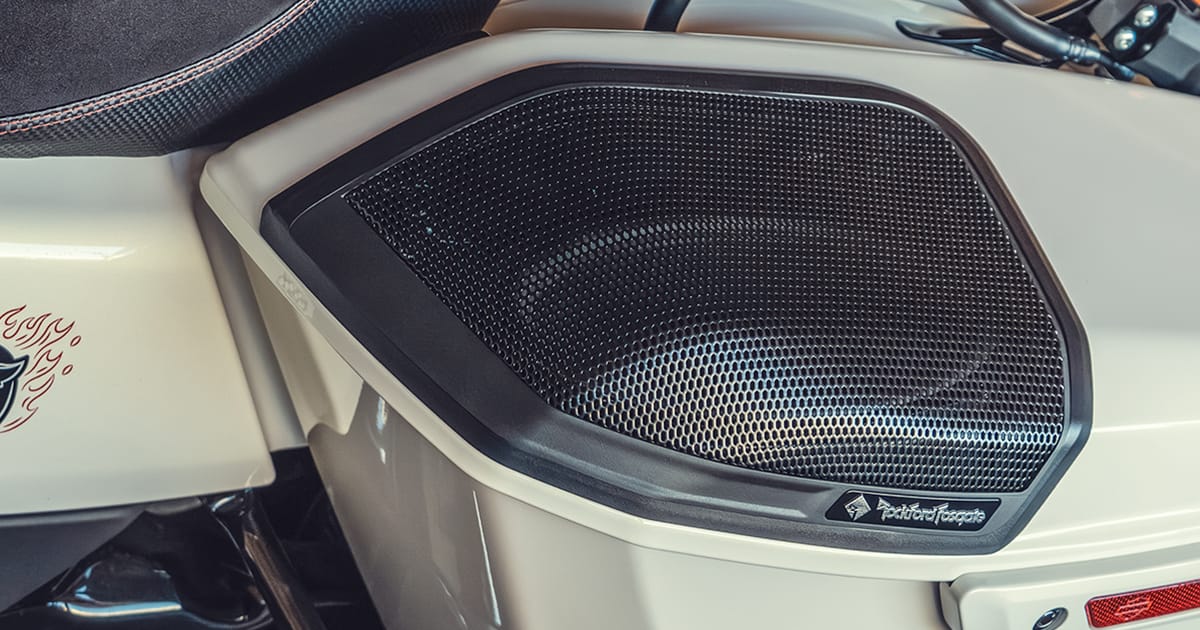
The HD24BL69 saddlebag lid speaker kit not only sounds great, but looks right at home on your Harley-Davidson.

How the HD24BL69 Kit Works

Here’s how the Rockford Fosgate HD24BL69 kit works. Your installer will remove the lids from the factory saddlebags, then protect them with masking tape. Next, the cutting templates included with the kit are put in place, and holes are drilled to serve as a pilot for a saw. Lastly, the bag-lids are cut to make room for the speaker upgrade.

Once the lids are cut, the grille and basket assemblies are put in place. The new baskets mount from the top, providing room for a large speaker. They fasten to a self-centering backer ring for a watertight seal, and integrated O-rings help improve water resistance. Finally, with the speaker and wiring installed, a set of grilles shaped to match the bag geometry fit in place, and the Rockford Fosgate badge on the outside shows you are serious about your music.
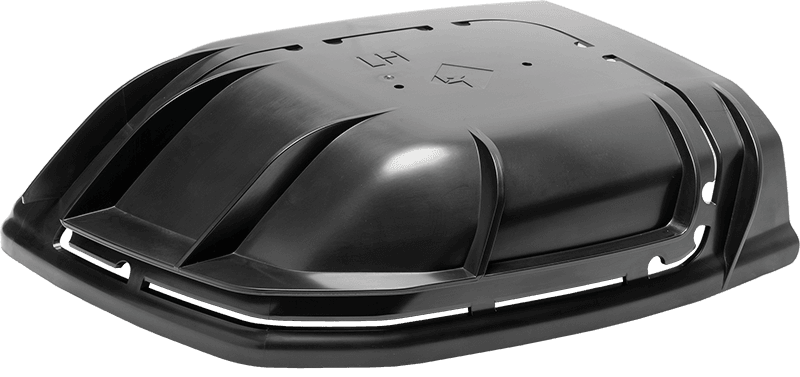
Rockford Fosgate HD24BL69
The new kit cutting templates include reinforcing ribs to make the installation process easier.

Exploring the new TMS24-69 Speakers

While every component in the kit is vital to performance, the heart of the upgrade is the new TMS24-69 speakers. These new speakers take everything you love about Rockford Fosgate motorcycle audio and take things up a notch or two. First and foremost, the speakers are Element Ready. This means they can handle exposure to rain and prolonged UV without fear of damage. Each component in the speaker, from the high-performance coaxial tweeter and curvilinear polypropylene woofer cone to the motor components and basket, won’t fail even after thousands of hours of shocks and vibration.

The new speakers are based around a glass-fiber reinforced PA66 Nylon basket. This rigid and thermally stable design ensures motor geometry remains accurate. The carbon-impregnated woofer cone is attached to the basket using a Santoprene rubber surround that resists rot and UV degradation. The carbon doping in the cone enhances thermal stability and damping, resulting in tight bass and clear midrange performance. The new speakers have more excursion capability than their predecessors, with an Xmax specification of 4.5 millimeters in each direction.

Speaking of output, Rockford Fosgate implemented its Vertical Attach Surround Technique (VAST) geometry on the woofer surround. VAST dramatically increases the driver’s cone area, which translates to more bass and improved efficiency.
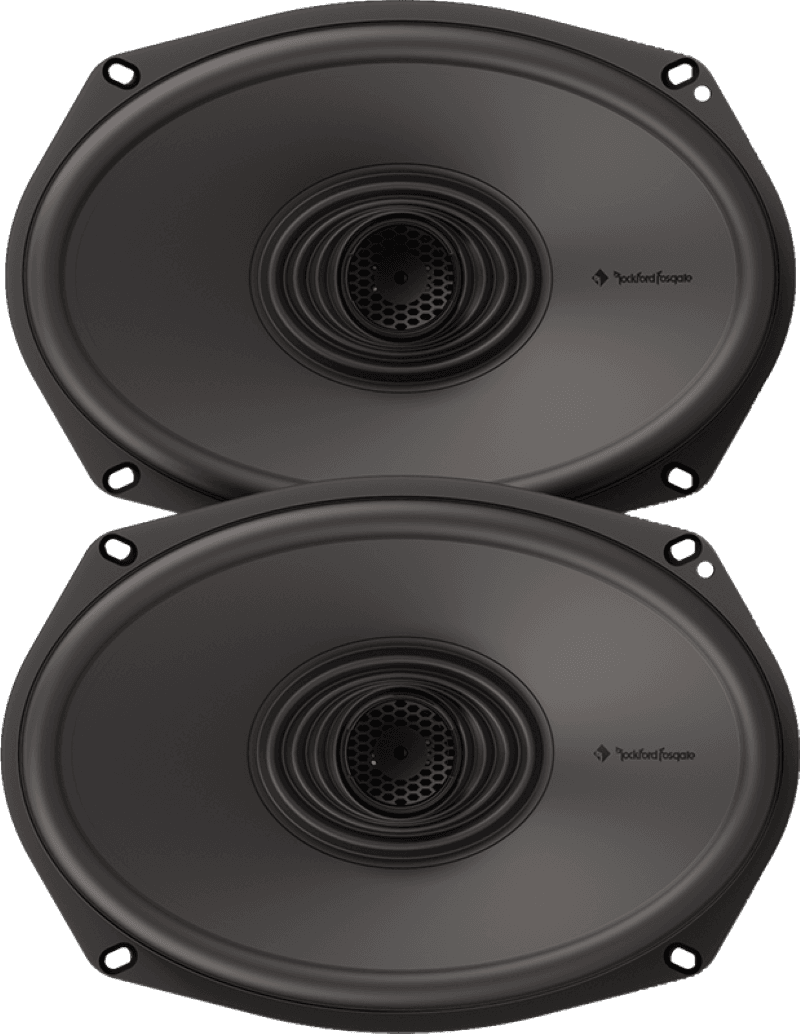
Rockford Fosgate HD24BL69
The new TMS24-69 speakers sound better and play louder than their predecessors.

Dual neodymium motor magnets ensure excellent speaker efficiency without adding a lot of weight to your bike. An integrated motor cover inside the saddlebag ensures your belongings won’t be exposed to high temperatures after a long ride with the volume cranked. Speaking of high power, the 1.5-inch Kapton voice coil is larger than previous speakers to increase power handling 50% over the 1st generation TMS69 speakers. Likewise, the tinsel leads to the coil are braided and stitched to the surround for reliable operation.

Finally, the TMS24-69 speakers feature a concealed passive crossover network that Rockford Fosgate calls their Integrated Concealed Crossover (ICC). This design eliminates the need to mount oversized external components, simplifying the installation process while ensuring maximum performance. The 4 kHz crossovers feature a second-order 12 dB/octave slope to ensure smooth performance across the entire listening range.

Power handling on the TMS24-69 is rated at 150 watts continuous, with a maximum power rating of 300 watts. The speakers are 91.4 dB efficient when measured at a distance of 1 meter and fed with 1 watt of power. That’s impressive for a speaker that still delivers bass down to 50 Hz. As with all Rockford Fosgate transducers, the specifications they provide are compliant with the ANSI/CTA-2031 standards, so you know you can trust them.
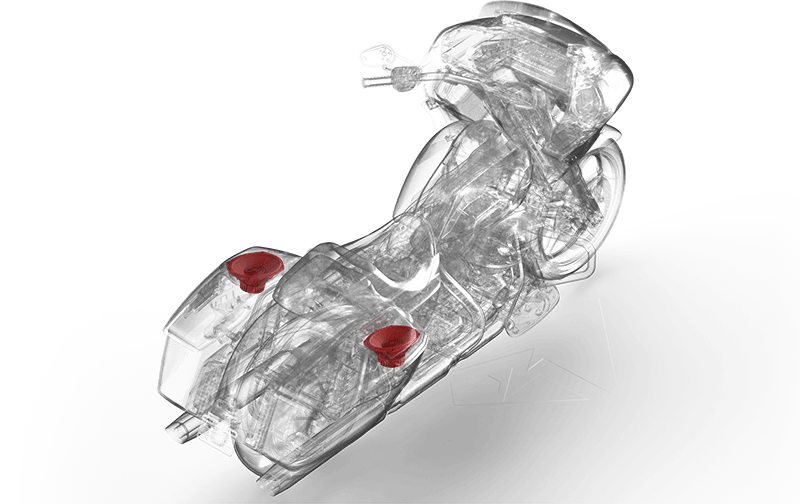
Rockford Fosgate HD24BL69
The HD24BL69 kit allows your installer to add rear saddlebag lid speakers to your 2024+ Road Glide or Street Glide.

Upgrade Your Harley-Davidson with Rockford Fosgate Today!

If you are looking to hear every word and note of your favorite music on your next ride, consider visiting a local authorized Rockford Fosgate retailer to learn more about the new HD24BL69 saddlebag speaker cut-in kit for 2024 and newer Harley-Davidson touring bikes. You can find an authorized retailer using the locator tool on their website.

Be sure to follow the team from Rockford Fosgate on Facebook, Instagram and YouTube to stay up-to-speed on all the amazing new products they will be releasing over the next year or so.

This article is written and produced by the team at www.BestCarAudio.com. Reproduction or use of any kind is prohibited without the express written permission of 1sixty8 media.
Filed Under: ARTICLES, Motorcycle Audio, PRODUCTS, RESOURCE LIBRARY Tagged With: Rockford Fosgate

Why Buy A Bigger Amplifier?

AmplifierWhen an audio enthusiast goes shopping for an amplifier, the question of “how much power do I need?” comes up almost every time. There are a few factors to take into consideration when answering this question. This article looks at those factors and provides some technical background to help support your decision.

Why Do We Need Power?

AmplifierQuite simply, when you send more power to a speaker, it moves farther and produces more output. Two limiting factors within the speaker itself control how much power it can handle. At higher frequencies, the limit is heat. Speakers are notoriously inefficient. The best convert about 2% of the energy sent to them into sound and the rest is converted to heat. When you send 60 watts of power to a speaker, most of that energy heats up the voice coil and the components around it. Eventually, those components will reach a temperature where they will fail. The speaker will usually stop working at this point, or shortly after.

The second limiting factor is how far the speaker can move. Inexpensive midrange speakers may be able to move back and forth about half an inch without creating massive distortion. Higher-end speakers have as much as twice as much cone excursion capability. (Speakers don’t sound the same at high volumes as they do at low. Audition your speakers at the volume you will be using them.)

Power vs. Output

Power works like this: When you double the power going to a speaker, the output increases by 3 dB. That is not a large amount. In fact, it is the smallest change in amplitude that is perceivable across the audible frequency range. (1 dB is the smallest perceivable change in amplitude where our hearing is most sensitive – 1 to 2 kHz).

Perceived volume is a different beast. An increase of 10 times the power sent to a speaker produces a doubling of perceived volume.

Speaker Efficiency

Another consideration in choosing an amplifier is the efficiency of your speakers. An inexpensive conventional midrange speaker may produce an average output of 91 dB when measured 1 meter away from the speaker cone and when driven with 1 watt of power. A high-quality speaker will likely be less efficient, but capable of playing over a wide range of frequencies. A measurement of 85 dB efficiency at the same distance and power level is not uncommon.

How Loud Do We Need it?

AmplifierA typical RMS sound pressure level for an orchestra, when you’re seated three or four rows back from the musicians, is around 100 dB. If we use our analogy of the 85 dB efficient speaker, we need 31.6 watts to get that speaker to play 100 dB. The problem is that this is the average power, not the peak power. Perhaps the performance crests at 110 dB? In that case, we need a peak power level of 316 watts. Just keep in mind that the speaker components are likely to melt if you keep this effort up for any significant amount of time.

We don’t suggest buying any speaker based on its efficiency. Criteria like linearity, lack of distortion, application limitations and frequency range are far more important. If you need it loud, buy more speakers, or larger speakers.

Distortion Happens

What happens if we run out of power in an amplifier? We get distortion. This distortion creates all sorts of high-frequency harmonic content. That increased high-frequency energy is what causes tweeters to fail. We need to choose an amplifier that will allow our speakers to play loudly enough without running out of power.

You are better off buying a 100 watt per channel amplifier and only using 50 watts than you are buying a 50 watt amplifier and occasionally causing it to distort. Remember, those 50 extra watts only result in an increase in output of 3 dB – assuming the speaker can handle it.

It Takes Power to Make Power

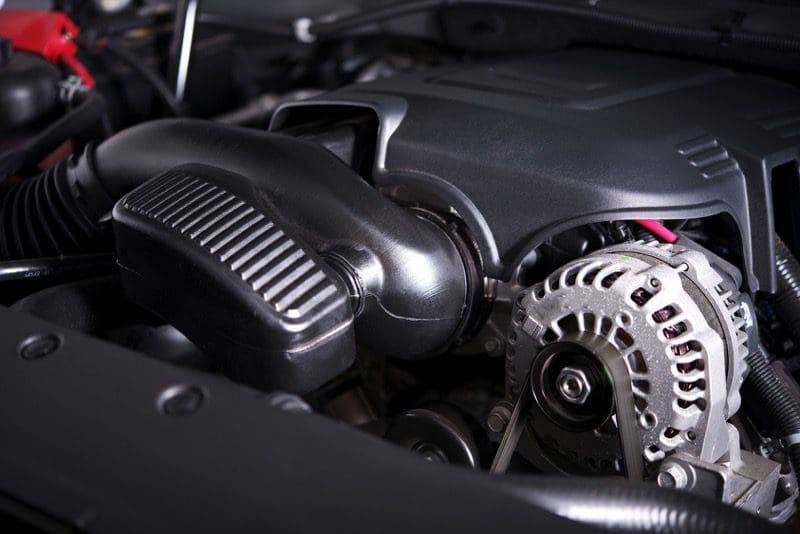
AmplifierA consideration that many people overlook is the ability to supply an amplifier with the power it needs to produce the power you want. Modern vehicles have electrical systems with reduced power production capabilities. Smaller alternators, smaller batteries and smaller wiring save weight. Reduced weight transforms into better fuel economy for the vehicle.

As a general rule of thumb for power consumption calculations, you can assume that every 100 watts of power from an amplifier will require about 10 amps of current from your electrical system. Yes, some amplifiers are more efficient than others, but this serves as a good, quick guideline.

If you want to purchase a 650 watt amplifier to power your subwoofer, then your electrical system (battery and alternator) has to be able to provide it with about 65 amps of current. This power requirement is on top of what is required to run the vehicle. The computers, lights, ignition system, radio and heater all consume power as well. On a modern compact car, it would be no surprise if you only had 30 to 40 amps of power left over for an amplifier.

You can get away with a big amplifier – but you can’t play it indefinitely, even with the vehicle running. Once you have exceeded the power delivery capabilities of the amplifier, the battery will start to supply current. You can kill a car battery, even with the vehicle running. Once you shut the car off, you may not have enough energy in the battery to restart it.

Blowing up Amplifiers

AmplifierAmplifiers do not like to be starved for power. When you run out of power to drive your amplifier, in most cases, the amplifier rail voltage starts to drop. Power starvation causes the maximum undistorted power production of the amplifier to decrease. We are back to the same scenario: Distortion causes harmonics, and harmonics can damage fragile speakers.

If you have had an amplifier fail, and the failure was because the power supply section of the amp self-destructed, chances are you were not able to feed the amp properly.

How Much Amplifier Power Do You Need?

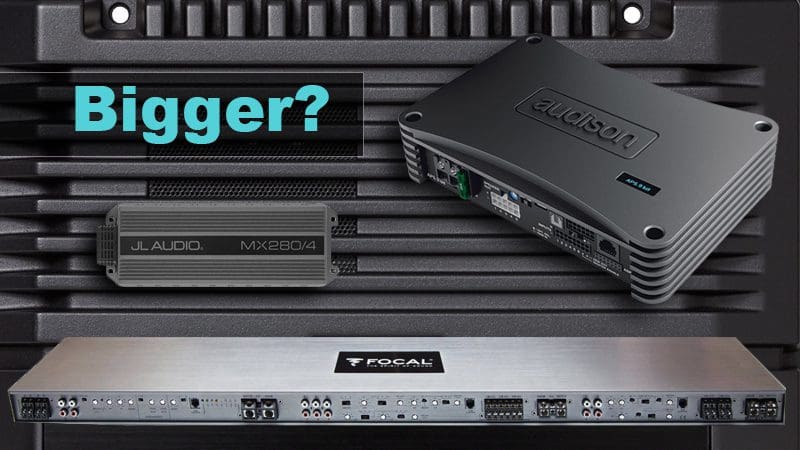
The solution: Buy as much as power as you can afford. Buy the biggest that will physically fit in your application. Get the highest-performance amplifier you can. Make sure your installer uses properly sized wiring to install the amplifier. Upgrade your car battery to a high-performance, high-capacity unit if you need more reserve power.

For more information, visit your local mobile electronics specialist retailer. Be honest about your needs and expectations for your audio system. They will be able to suggest a solution that sounds fantastic and will offer years of reliable performance.

This article is written and produced by the team at www.BestCarAudio.com. Reproduction or use of any kind is prohibited without the express written permission of 1sixty8 media.

Filed Under: ARTICLES, Car Audio, RESOURCE LIBRARY

Product Spotlight: Rockford Fosgate HD24-STG2 and HD24-STG3

Rockford Fosgate HD24-STG2

If there were a car audio brand synonymous with motorcycle audio upgrades for Harley-Davidson Road Glide and Street Glide motorcycles, it would be Rockford Fosgate. Their upgrade kits are the benchmark for improving the audio on these touring bikes. With the introduction of new fairing and saddlebags on 2024 and later bikes, Rockford Fosgate has introduced new audio upgrade kits featuring a unique amplifier solution. Let’s check out the HD24-STG2 and HD24-STG3 audio kits for the 2024 and up bikes.

Rockford Fosgate HD24-STG2 Features

The HD24-STG2 is a high-performance two-speaker amplified audio upgrade designed for 2024 and newer Road Glide and Street Glide models. You can find exact fitment details on the product page (https://rockfordfosgate.com/products/details/hd24-stg2/). The kit includes a set of the new TMS24-65 6.5-inch Element Ready speakers, complete with grilles, and a 1,000-watt amplifier.

Rockford Fosgate HD24-STG2
The Rockford Fosgate HD24-STG2 audio upgrade kit for 2024 and up Road Glide and Street Glide bikes includes a high-power amp and new fairing speakers.

The TMS24-65 speakers are the next evolution of Rockford Fosgate’s motorcycle speakers. They feature a carbon-filled curvilinear polypropylene woofer cone and a Santoprene rubber surround. The speaker utilizes the Vertical Attach Surround Technique (VAST) design to maximize cone area, thereby increasing efficiency and bass output. The 1.5-inch Kapton voice coil is larger than that of previous models, providing improved power handling. The tweeter remains mounted in the center of the cone, delivering perfectly aligned output at all angles. The frequency response has been improved over the 1st generation by providing extended low-end response and reduced distortion for a richer, more balanced listening experience.

Rockford Fosgate HD24-STG2
The TMS24-65 speakers are impressively efficient, allowing your audio system to play loudly without straining the bike’s electrical system.

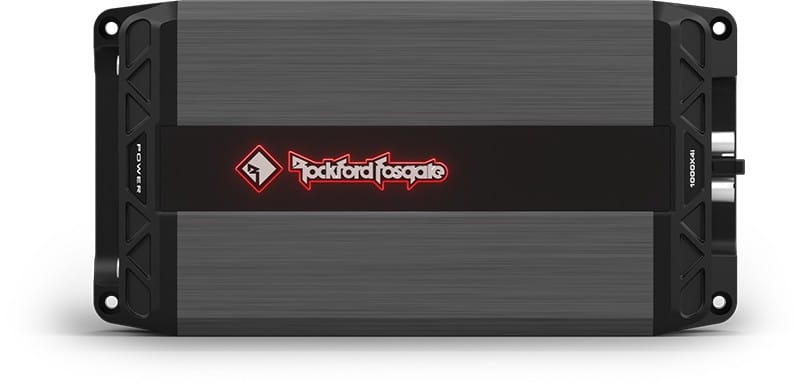
The new amplifier is a masterpiece. First, it connects directly to the A2B digital audio bus output of the Skyline OS factory radio, eliminating the need for expensive interfaces. The TMA-1000X4i amp is rated to produce up to 200 watts of power per channel into four 4-ohm or 2-ohm loads. It can be bridged to deliver 400 watts into a pair of four-ohm loads. The amplifier’s dynamic power output is 1,200 watts.

The amplifier includes an integrated digital signal processor. Your installer can configure the amp for the type of stage installed using the RF Connect app. These are DSP presets done by Rockford Fosgate with the EQ, Gain, and Crossover settings pre-configured to take the hassle out of tuning the amplifier manually.

Rockford Fosgate HD24-STG2
The TMA-1000X4i amplifier is capable of producing 200 watts of power per channel – four times the power provided by the factory amp.

The HD24-STG2 kit includes an RFK-HD24 amplifier installation kit, complete with a bracket and all necessary wiring, for your motorcycle. Best of all, everything is designed to connect directly to the factory audio system wiring, eliminating the need for cutting or splicing. This means your warranty remains intact.

Rockford Fosgate HD24-STG3 Upgrade

If you are looking for even more sound from your Harley-Davidson, then the Stage 3 kit is the way to go. The Rockford Fosgate HD24-STG3 builds upon the features of the Stage 2 kit by incorporating the HD24BL69 bag lid speaker kit. This kit includes a set of the new TMS24-69 6×9-inch Element Ready speakers, upgraded cut-in speaker grilles, and all the wiring necessary to connect to the TMA-1000X4i amplifier. It’s important to note, this system is designed for “blank” saddlebags, so if you already have color matched speaker lids, the HD24-STG2 + TMS24-69 speakers is a better choice.

Rockford Fosgate HD24-STG2
The HD24BL69 saddlebag speaker kit for 2024+ Road Glide and Street Glide adds impressive performance to the Stage 2 audio upgrade kit.

The new 2024 and later saddlebag speaker kit plays louder while occupying less cargo space. It even works with the Power Lock Kit. Being Element Ready means everything can withstand water, dust, prolonged UV exposure, and harsh vibrations —such as those experienced by Road Glide and Street Glide bikes.

Upgrade Your New Harley-Davidson Motorcycle Today!

If you have a 2024 or newer Street Glide or Road Glide, it’s time to visit a local authorized Rockford Fosgate retailer and ask about the HD24-STG2 and HD24-STG3 audio system upgrade kits. They are designed to deliver a massive sound upgrade without any headaches. You can find a retailer near you using the Dealer Locator on the Rockford Fosgate website.

Be sure to follow Rockford Fosgate on Facebook, Instagram and YouTube to stay up to date with new product releases and coverage of the events their team attends.

This article is written and produced by the team at www.BestCarAudio.com. Reproduction or use of any kind is prohibited without the express written permission of 1sixty8 media.
Filed Under: ARTICLES, Motorcycle Audio, PRODUCTS, RESOURCE LIBRARY Tagged With: Rockford Fosgate

What Is An MP3 File?

MP3

You cannot have talked about audio and computers any time in the last 15 years and not have heard of an MP3 file. MP3 audio files and websites, like the original Napster, started a shift in where, how and when people acquired music. If you are on the older end of the spectrum, like many of us in the mobile electronics industry, then you bought your CDs, cassettes and maybe even your vinyl at a record store. Computers and the Internet changed that. You could go online after dinner and download an illegal copy of a song in a few minutes. It was wrong, but people acquired tens of millions of songs this way.

In the 1990s and early 2000s, accessing the Internet was slow. We started connecting to the Internet using phone lines and modems. Each byte of information took time to transfer to your computer, so anything that would speed up the process was a treat. Downloading (stealing) music using the Internet is where the popularity of the MP3 audio file met its calling.

A Primer on Digital Audio

MP3We could write 10 articles about digital audio – and we just might. For now, we are going to look at the basics and use the compact disc (CD) as our reference. CDs store digital audio sampled at 44.1 kHz with a resolution of 16 bits. These numbers mean each sample can have an amplitude that is a single value within a range of 65,536 different levels (2 to the power of 16). The information is sampled 44,100 times a second. Sampling at what is known as 44.1/16 allows capturing the audible range of audio (considered 20 Hz to 20 kHz) with good detail and accuracy.

To store 1 second of audio at this resolution, we need to store 1,411,200 bits of information. Anyone who has played with audio transcoding software may recognize 1,411 kbps as a standard data rate. This number is calculated by multiplying the number bits per sample (16) times the number of samples per second (44,100) times 2. The times-2 factor is because we record in stereo – which is two channels. So, a 3-minute long song is 254,016,000 bits or 31,752,000 bytes.

Let’s round it off to 31 megabytes of information. Can you imagine how long it takes to download that with a dial-up modem running at 14,400 baud? The answer is at least 3.5 minutes – without error checking, line noise and other factors that slow the real download time to about 5.5 minutes.

Data Compression

What if someone found a way to shrink the size of the audio file to speed up download time and reduce bandwidth usage? The caveat is that the audio still sounds essentially the same on most basic audio systems, such as a TV, computer speakers or a 1990s factory car radio. In 1991, a group of companies, including the Fraunhofer Institute, France Telecom, Philips, TDF and IRT, started working on a way to reduce file size while maintaining relevant information. That is the key to how file size is reduced using MP3 compression.

The MP3 file format is a “lossy compression” algorithm. Lossy compression means that information is thrown away to reduce file size. The development team worked on a compression method called perceptual encoding to decide what information to remove. Perceptual encoding is based on how we hear sounds relative to other information, and the limits of our hearing.

What MP3 Files Throw Out

We are going to analyze the information that MP3 files remove to reduce file size. One of the easiest ways to cut back on information storage is to reduce the highest frequency that will be reproduced. If we analyze a 128 kbps MP3 file, we see that the highest reproduced frequency is just below 16 kHz. If that were the only information that was removed, our new bitrate with 16-bit samples in stereo would be about 1,004,800 kbps instead of 1,411,200 kbps for 20.05 kHz.

MP3The next part of the compression process analyzes content that is common to both channels. It is common for some parts of a recording to be virtually in mono. The encoding process removes duplicated information from the file and adds code to copy the opposite channel. If the audio track were purely mono, the file size would be divided in two. Few tracks are completely mono, but we can see more space saving from this process.

Subsequent processing looks at low-level information during high-amplitude passages. Let’s use the example of a song with a lot of bass in it and some very quiet harmonic midrange information. Perceptual encoding processes like MP3 will remove this low-level information from the audio track. This process is called audio masking. There is enough audio information at other frequencies to distract you from hearing what is removed.

Can You Hear the Difference?

Dozens – nay, hundreds – of tests have compared MP3 files to full CD-quality audio tracks. Are there differences? There most certainly are. One thing became apparent during our research: How an MP3 file is created is crucial to its subjective sound quality. Different encoders work in different ways with different results.

Perhaps the best way to describe the difference between a CD-quality recording and an MP3 file is to look at the difference between the two. I wish we could share some samples here for you to listen to, but that would break copyright laws. What we can do is visually show you the difference.

We took a 3-second sample from Daft Punk’s “Give Life Back to Music.” We chose this track because of Daft Punk’s clear and conscious effort to make a high-resolution version of the album commercially available. We want to thank them for that! The sample is from 31.5 seconds to 34.5 seconds into the song.

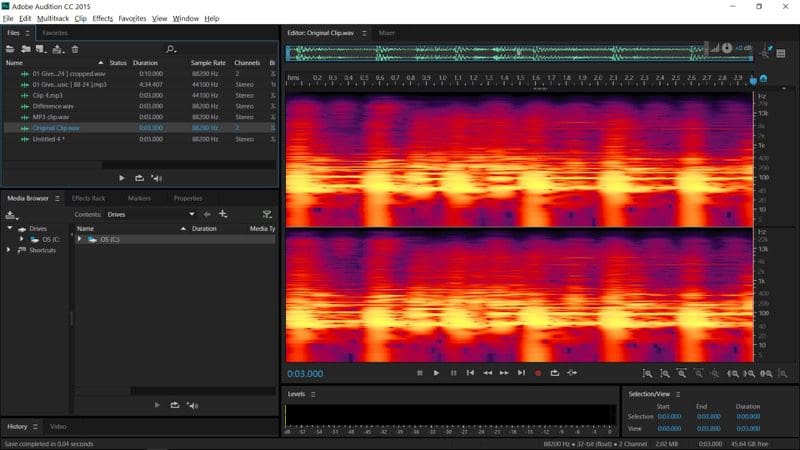
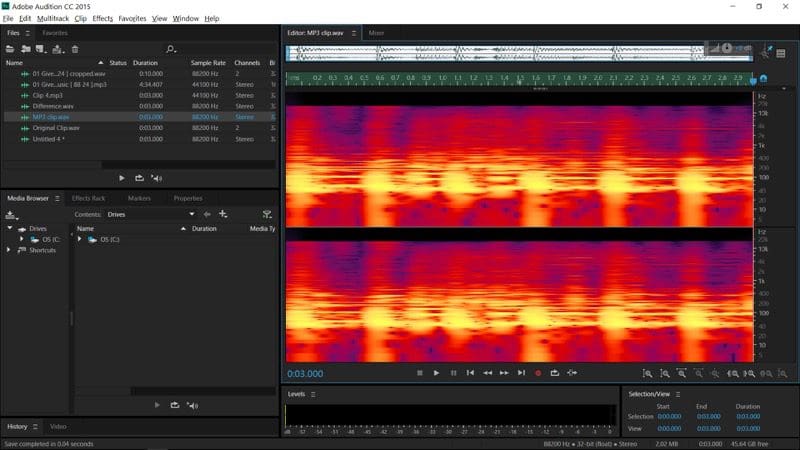
This Spectrogram shows the frequency content of the sample. The horizontal scale is time. The vertical scale is frequency. Finally, the color intensity shows the amplitude.

MP3
This is the original sample.

You can see that there is frequency content up to 30 kHz, clearly demonstrating the high-resolution nature of this track. Each vertical color band represents a drum machine beat – more or less.

128 kbs MP3 File Analyzation

MP3
This is the sample converted to a 128 kbps MP3 file.

It is clear that audio information above 16 kHz has been removed. Infrasonic frequency content is clearly different as well. There is more information in the MP3 file below 30 Hz compared to the original. This increase in information will, however, present itself as less-dynamic range.

MP3 Vs Original File

MP3
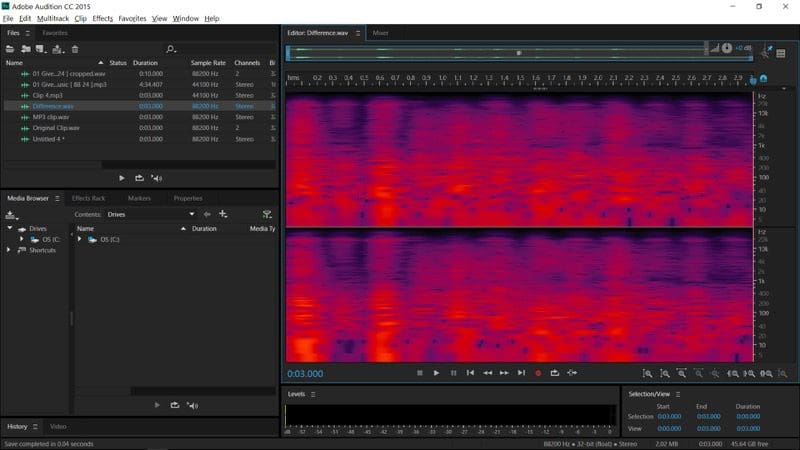
This is the difference between the Original sample and the MP3 Sample.

We inverted the MP3 file and added it to the original sample to make the image you see here. The net result is the difference between the two tracks. You can see the high-frequency content that was removed above 16 kHz. In fact, information was removed at all frequencies, and that information follows the intensity pattern of the audio file.

The original file has a peak amplitude of -0.1 dB for both channels and an average amplitude of about -14.2 dB. The removed information has a peak level of -10.9 dB and an average amplitude of -37.01. The removed information is buried deep below the peak amplitude information.

MP3What does the removed audio sound like? We would describe the clip as the sound of a distant marching band. The audio is mostly high-frequency information. The track has a decidedly warbled texture to it as well: The drum machine beats are clear and present, but they sound like distorted cymbal hits.

Even with a high-end headphone preamp and studio grade headphones, the difference is hard to perceive when switching between the original track and the MP3 file. In a listening environment with a larger soundstage, it may be more apparent.

Conclusions about MP3 Files

Purists will tell you that you should have the highest-quality recordings available. There is no fault to this logic. Why skimp when you can have it all? High bitrate MP3 files, like those at 320 kbps, for example, are excellent in quality. Repeated testing has shown that when created with quality compression algorithms, the sound difference between a CD-quality recording and a 320 kbps MP3 file is almost impossible to detect. Lower bitrate MP3 files start to dispose of more information, and the differences become bigger.

The latest source units on the market are capable of playing WAV and FLAC audio files of great resolution and bit depth. Shortly, we will see units that will play MQA files over digital connections. Almost every source will handle MP3 and WMA files.

Drop into your local mobile electronics specialist retailer today, and bring along some music to enjoy. We think you will be impressed – no matter what format you choose.

This article is written and produced by the team at www.BestCarAudio.com. Reproduction or use of any kind is prohibited without the express written permission of 1sixty8 media.
Filed Under: ARTICLES, Car Audio, RESOURCE LIBRARY

Amplifier Classes: Making Sense Out of Class AB and Class D Amps

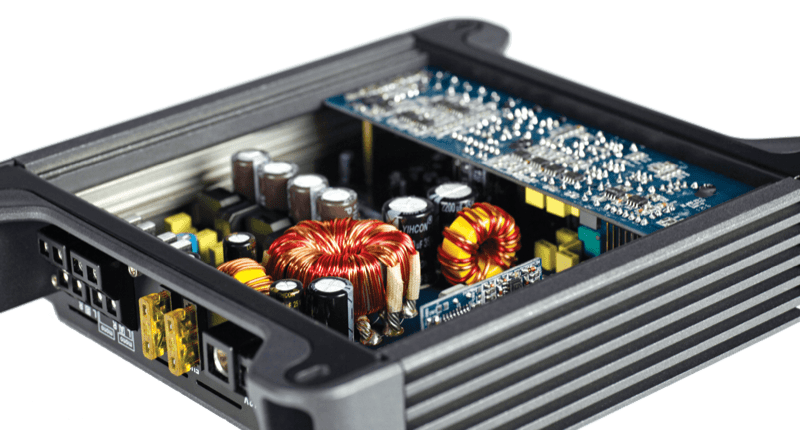
Amplifier ClassesAmplifiers have a very tough job. They have to take a very low voltage signal and increase it in amplitude so it can drive a speaker. In this transformation, we expect the signal to remain pure – no distortion or no noise should be added. We also want significant amounts of power to drive our speakers, even though we only feed our amplifiers with a measly 12 to 14 volts of electricity. The laws of physics seem to want to work against us at every turn – but we prevail! Modern car audio amplifiers are amazing feats of engineering and design. This article looks at the two main types of amplifier classes used in the car audio industry and the benefits and drawbacks of each. Welcome to Class AB vs. Class D.

The Math behind how Amplifiers Make Power

No matter how we configure the components inside an amplifier, the goal is the same: Increase the voltage of the preamp audio signal so it can drive a speaker. Because the speakers we use are low in impedance (2 or 4 ohms for most midrange speakers), we need to be able to provide a significant amount of current to the speaker as well. This delivery of current to the speaker is the second task an amplifier has to undertake.

By way of some quick math, if a 4 ohm speaker is getting a 12V RMS signal, we can make a few calculations. To calculate the current flowing through the speaker, we divide the supplied voltage by the impedance of the speaker. In this example, we have 12 divided by 4, so 3 amps of current are flowing through the speaker wires and the voice coil. An easy way to calculate the power going to the speaker is to multiply the supplied voltage times the supplied current. The product of 12 times 3 is 36. This speaker is receiving 36 watts of power.

Let’s look at the same example as though this were a subwoofer amplifier. In this second example, we will assume we have a Dual 2 Ohm voice coil subwoofer with both coils wired in parallel to produce a 1 ohm load. If we supply this speaker with 12 Vrms of signal, then 12 amps of current flow through the speaker wire and the subwoofer. To calculate power, we multiply 12 times 12 to get 144 watts. 144 watts is a lot more power and current for the same amount of voltage.

General Amplifier Function Overview

Most amplifiers are composed of three or four key sections (or stages), depending on their design and complexity. The input stage is the portion of the amp where the low-level preamp audio signal enters the amp and receives any processing in the form of equalization or filtering.

An amplifier has a power supply. The power supply converts the supplied 12 to 14 V of direct current to positive and negative rail voltages. Let’s say, for example, a theoretical amplifier has +25 and -25V rails, relative to our ground reference. Depending on the size of the amp, there will be a driver stage. The driver stage is responsible for increasing the low-level audio signal to a higher voltage. How much the driver stage increases the voltage depends on how much power the amp will be making.

Amplifier Classes
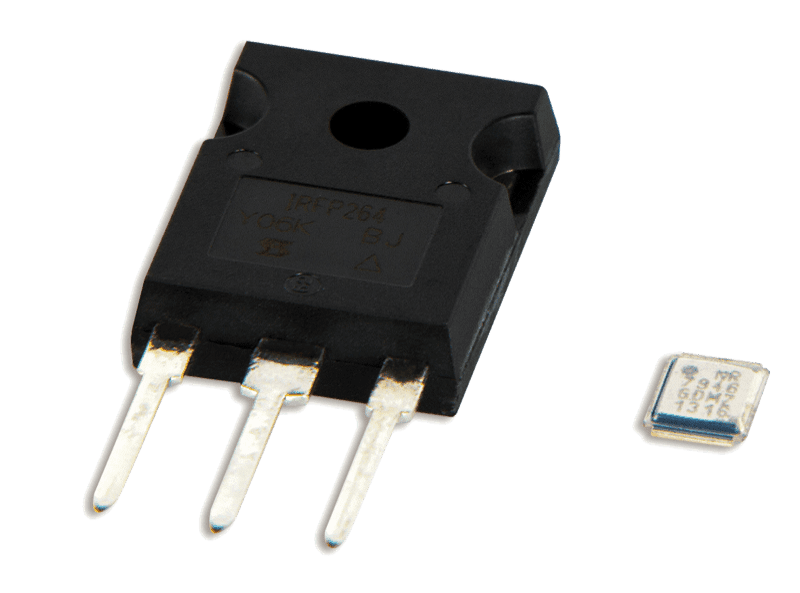
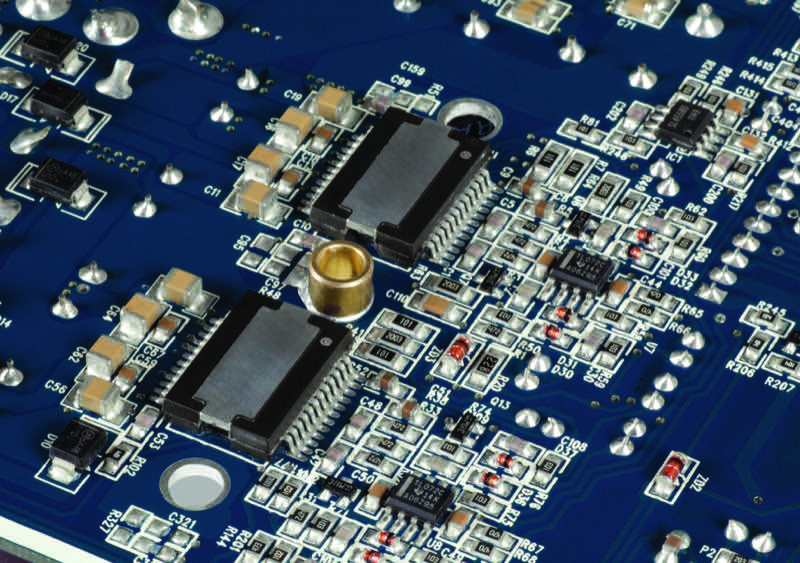
Mosfets have shrunken in size over the years to the minuscule size now available (right).

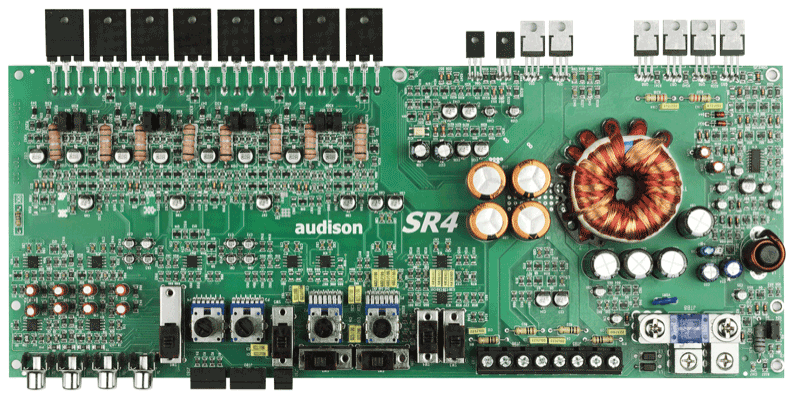
Finally, we have the output stage. The output stage is relatively simple – it does not significantly alter the signal coming from the driver stage, but the devices (MOSFETs or transistors) used to provide the output signal with the current the load requires. The power supply and the output stage are the two portions of the amp that do the most “hard work.” That is to say, they are the stages that pass a lot of current.

In almost all amps on the market, we use dedicated devices for the positive half of the waveform and separate devices for the negative half of the waveform. To clarify , if we measure the output signal of the amplifier about the vehicle ground, we will see that it swings back and forth above and below 0V. Think back to our +25 V and -25 V power rails. Speakers don’t care about the value of the signal being sent to them; all they care about is the difference in voltage from one end of the voice coil to the other end.

Class AB Amplifiers

Amplifier ClassesFor this article, we are going to generalize Class AB amps into an Analog, Amplifier model. In our analog amplifier, we have large transistors in the output stage of the amp. When we want half of the positive rail voltage at the output, we feed half the voltage to the positive output device. When the signal goes negative, we turn off the positive device and start using the negative device only. Looked at a different way, the audio signal from the driver stage controls the resistance of the output devices and, subsequently, how much current can flow to the speaker.

In an Analog Amplifier, the output devices can be “turned on” in varying amounts about the audio signal. This means the output devices are often acting as resistors. Power is wasted as heat when we pass current through a resistor. Keep this in mind as part of our comparison later in the article.

Class D Amplifiers

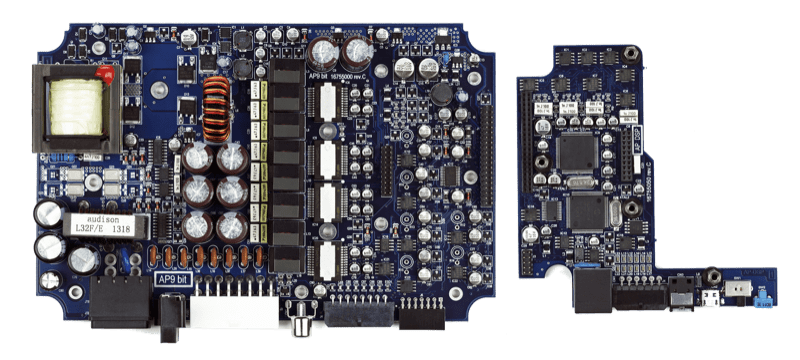
Amplifier ClassesIn a Class D amp, the output devices receive a control from a Controller Integrated Circuit (IC). This controller sends out a variable duty cycle square wave. The square wave amplitude is high enough that it turns the output devices all the way on or off. The output devices spend very little time operating as resistors and act more like switches.

The logical question is, how in the world do we get music out of a square wave? If you thought that, good for you! The frequency of the square wave is much higher than the maximum frequency of our music. In fact, some modern Class D amplifiers switch the output devices at frequencies as high as 600 kHz.

Amplifier Classes
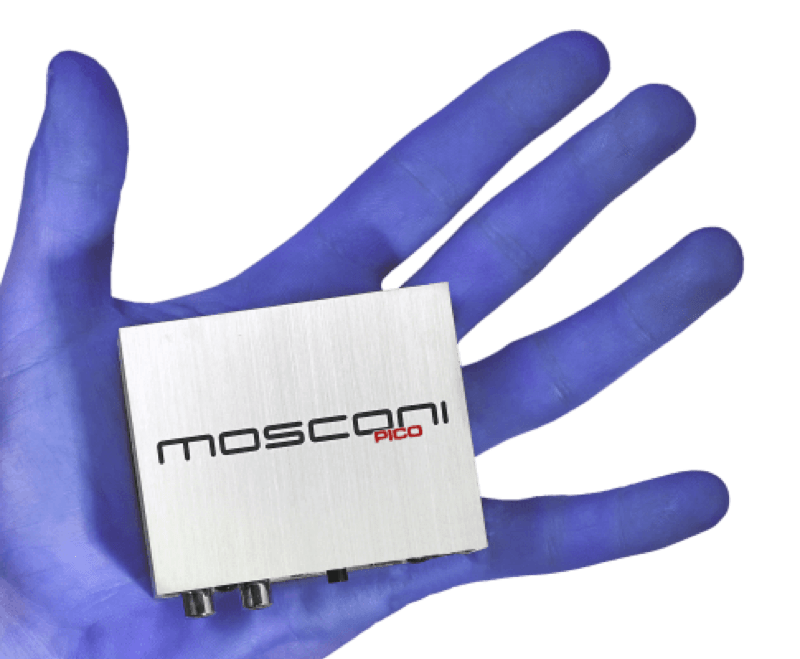
An additional benefit of class D amplifiers is the potential for extremely compact size.

To recreate music, the Class D controller sends out a signal that is Pulse Width Modulated. The amount of “on” time about the “off” time determines the output level of the signal. As a very general analogy, if the positive output devices were sent a square wave with a 50% duty cycle (on for as much time as it was off), then the average of the output would be 50% of the positive rail voltage. If the square wave is on for 75% of the time, then off for 25%, then we would get 75% of the rail voltage at the output.

As you can imagine, the signal from the Class D controller is quite complex. It has to modulate the duty cycle of the square wave going to the positive and negative devices fast enough to accurately recreate the audio signal. It also has to control both the positive and the negative output devices separately.

Benefits and Drawbacks of Analog Amplifiers

Because the audio signal in an analog amplifier is never chopped up into tiny pieces, analog amplifiers can remain faithful to the original signal. The best-sounding amplifiers in the mobile electronics industry are analog. Analog amplifiers are, historically, given a reputation for accurate high-frequency response.

The drawback of an analog amplifier is its efficiency. Efficiency describes how much energy is wasted as heat as compared to the energy sent to the speaker. Because of the output devices in an analog amplifier work as variable resistors, they get hot. Typical analog amplifiers operate in the 70-80% efficiency range regarding total efficiency, while operating at full power. That missing 20-30% is released as heat. At lower output level, the efficiency drops even more.

Benefits and Drawbacks of Digital Amplifiers

Amplifier Classes
The integrated circuit of the class D amplifier controls the switching.

Modern digital amplifiers switch at extremely high frequencies. We see amps capable of audio frequency response beyond 50 kHz, and some that exceed 70 kHz. This performance is a long way from the first Class D amps that were only for subwoofers and struggled to produce audio above 5 kHz. That said, because digital amplifiers require filter networks at the end of the output stage, they still cannot quite match the performance of a premium analog amp. With this information in mind, consider that there are some good digital amplifiers that sound better than many poorly designed analog amplifiers.

Because the output devices of a digital amplifier rarely operate in their resistive range, these amplifiers can be very efficient. A well-designed Class D amp can have an efficiency around 92%.

Another problem with Class D amplifiers is noise. Because the output devices are driven by a square wave, there is a lot of high-frequency energy in the output signal. The filter network we talked about removes much of that from the output signal, but that energy can still have detrimental effects on other systems in the vehicle. An unfortunately common trait for many Class D amps is that they cause interference with radio reception when in operation.

Choosing Between Amplifier Classes

Amplifier ClassesIt would be nice if we could formulate a set of hard-and-fast rules for choosing the right amplifier for your system. With so many variations on each kind of amp at so many different price points, that is truly impossible. We strongly suggest that the only way to pick an amp is to compare one to another under controlled conditions: Use the same music and the same speakers, and listen at the same volume. You will hear differences in frequency response and dramatic differences in imaging and staging capabilities.

Is one kind of amp better than the other? For an installation dedicated purely to sound quality, the choice is clear. For an installation where power delivery is limited or massive amounts of power are required, the choice is clear there as well. In the middle, it depends on your application and budget.

Drop in at your local mobile electronics specialist retailer to find out about the latest amplifiers on the market. They would be happy to help you choose one that meets your application and works with your budget.

This article is written and produced by the team at www.BestCarAudio.com. Reproduction or use of any kind is prohibited without the express written permission of 1sixty8 media.

Filed Under: RESOURCE LIBRARY, ARTICLES, Car Audio

  • « Previous Page
  • 1
  • 2
  • 3
  • 4
  • 5
  • 6
  • …
  • 18
  • Next Page »

Recent Articles

Multiple vehicles on a city street at night with their headlights on

Understanding Replacement Automotive Headlight Bulb Color

April 5, 2026 

Upgrading the headlight bulbs in your car or truck can dramatically improve your safety and the safety of other drivers, pedestrians and cyclists. Your local mobile enhancement … [Read More...]

The Rockford Fosgate P2V2-69HO

Product Spotlight: Rockford Fosgate P2V2-69HO

March 2, 2026 

Since the 2025 SEMA show in Las Vegas, Rockford Fosgate fanatics have been talking about the new Punch series speakers. We’ve already taken a look at the P1V2-65 coaxial and … [Read More...]

Female hands on steering wheel

Steering Wheel Audio Control Integration

March 1, 2026 

When you go shopping for a new radio for your car, one of the many questions the product specialist should ask you is whether your existing radio has steering wheel-mounted audio … [Read More...]

The JL Audio AP6006

Product Spotlight: JL Audio AP600/6

February 16, 2026 

A few decades ago, amplifiers designed for marine applications were not only huge but also inefficient and, crucially, not truly waterproof. Things have come a long way since then, … [Read More...]

ADS iDatalink Maestro APX Kits

Product Spotlight: ADS iDatalink Maestro APX Kits

February 2, 2026 

In February of 2025, Automotive Data Solutions (ADS) introduced the world to a new way of installing car radios. In their presentation, they discussed how aftermarket source unit … [Read More...]

Subscribe!

Enter your email address to subscribe to our website and receive notifications of new posts by email.

Join 8 other subscribers

Testimonials

Nice staff and honor their work

Audio Crew did some work for me about 2yrs ago. A speaker they installed wasn't working properly. They checked it out and problem was a corroded wire. They fixed the problem and told me no charge for the repair. Very nice of them to do that as problem wasn't their fault in the first place. Audio Crew have a nice staff and honor their work.

VERY HONEST and PROFESSIONAL company

I purchased a 2019 used car for my wife and she wanted a remote started installed. I went to Audio Crew, who I had dealt with before, got a price and made an appointment. We dropped the car off the night before, for the appointment with a request that they call us when ready. Early the next morning, I received a call telling me that there was good news!! The car already had a remote starter which was programmed into the factory remote. We only need to press the "lock" button three times to star the car!! The dealer who sold us the car was not aware of that, it was a pleasant surprise to us and a $350 savings. THANK YOU to a VERY HONEST and PROFESSIONAL company.

Absolutely the best service

Absolutely the best service you will get anywhere. They go above and beyond! Can’t recommend them more! They fixed our issue quickly. Super friendly and helpful. Will not buy anywhere else.

Great Service

Great service, huge demo room with great prices. Very knowledgeable and professional service from the owner and will work within your budget to help you achieve your goals in the sound system your looking for. Extremely great experience dealing with them, also pricing was excellent competitive prices.

Subscribe to Our Website

Enter your email address to subscribe to our website and receive notifications of new posts by email.

Location


Get Directions to Audio Crew

Address

Audio Crew

624 Salisbury Rd
Moncton, NB E1E 1B8
506-858-2739

Connect With Us

  • Facebook
  • Instagram

Services

  • Car Audio
  • Marine Audio
  • Motorcycle Audio
  • Remote Starters
  • UTV and Side-by-Side Upgrades

Store Hours

Monday, Tuesday, Wednesday, Thursday, Friday8:30 am – 5:00 pm

Copyright © 2026 Audio Crew · Privacy Policy · Website by 1sixty8 media · Log in


Loading Comments...